

DPF Regeneration and Cleaning
-
Phone
+48 33 870 42 00
Call Us -
WhatsApp
+48 532 161 000
Message on WhatsApp -
E-mail
biuro@wibako.pl
Send an E-mail
Professional DPF Filter Regeneration and Cleaning
DPF Filter Regeneration
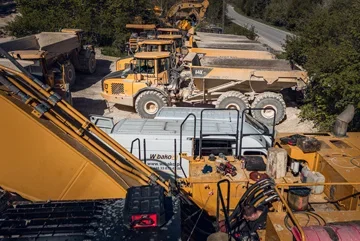
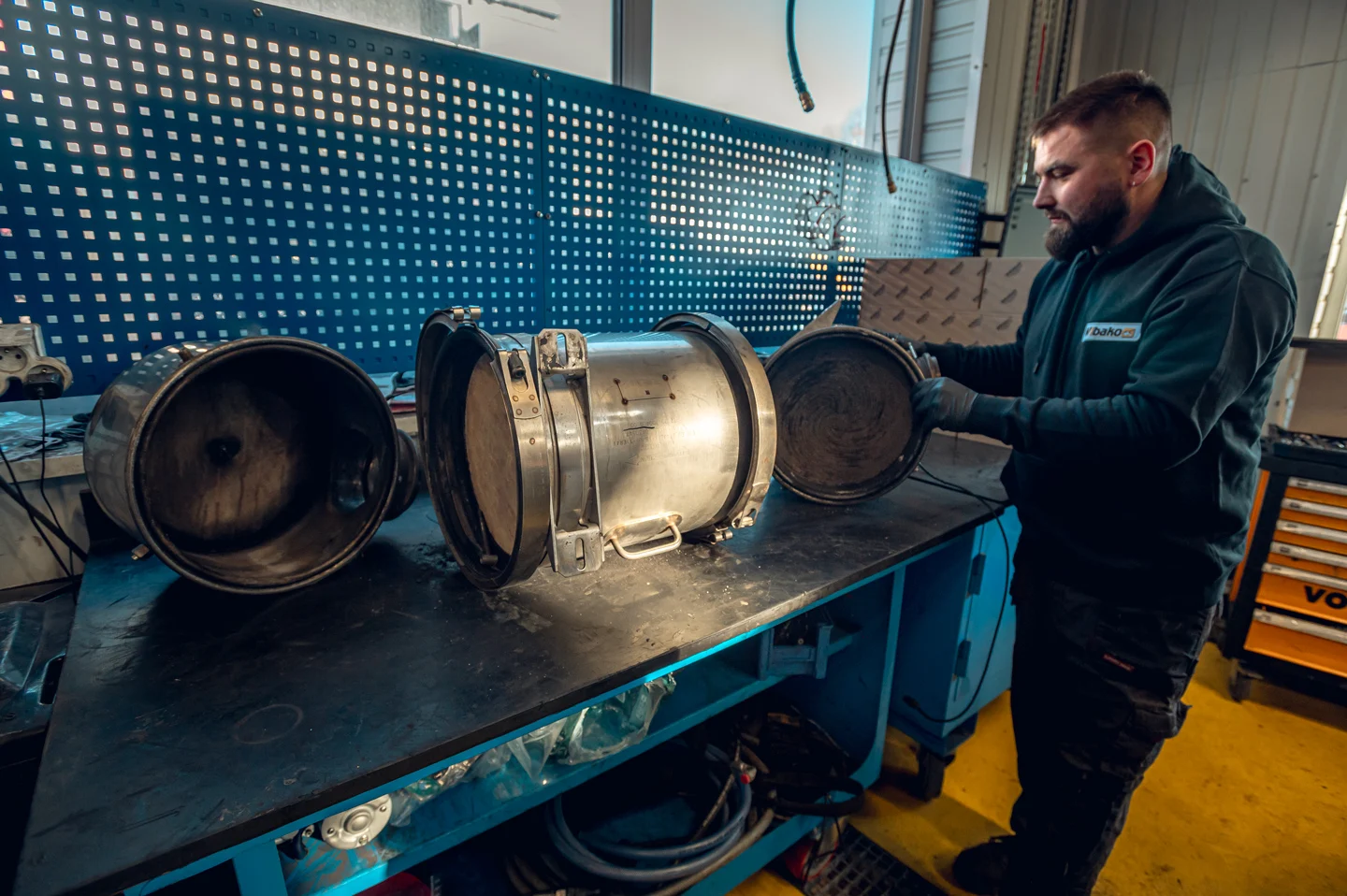
Our workshop specializes in comprehensive DPF filter restoration. In our daily work, we use advanced technical facilities designed to handle components from machines operating under the heaviest loads. You can easily send us the disassembled part by courier — we will carry out detailed diagnostics, precise cleaning, and flow testing on-site so the component regains its factory-level permeability.
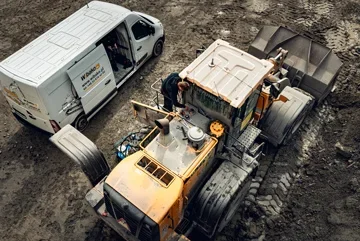
If removing the filter yourself is problematic, we also offer support from our mobile service team. We will come directly to your location, diagnose the issue, safely remove the component, and take it for regeneration. Once the process is completed, we reinstall the filter and ensure the entire system operates flawlessly. By entrusting this task to experts with years of industry experience, you gain a guarantee of fast turnaround times, helping you avoid financial losses caused by equipment downtime.
Detailed Diagnostics and Application
DPF Filter Repair
We begin the entire process by placing the component on a specialized testing station. This equipment allows us to precisely measure key input values, including:
- Backpressure
- Airflow rate
- Actual contamination level of the component
Once we obtain accurate readings of the initial parameters, a dedicated advanced chemical solution is applied inside the DPF filter. The purpose of this agent is to effectively break down and liquefy compacted deposits, soot, and accumulated ash.
Most importantly, the chemical works aggressively against dirt while remaining completely safe for the delicate ceramic core. This non-invasive protection of the filter structure is especially important in construction machinery, which operates under extreme loads in the harshest working conditions.
Comprehensive Service
DPF Filter Cleaning
A key element of the entire process is hydrodynamic cleaning, which we perform in several precisely planned stages:
Reverse Flushing (Counter-Flow)
The component is cyclically flooded with water mixed with a dedicated cleaning agent, then subjected to compressed air pulses and forced liquid circulation. The entire process takes place at temperatures around 70°C, allowing efficient dirt removal without the risk of thermal overload to the core.
Parameter Adjustment to Filter Specifications
The operating mode of the cleaning machine is always adapted to the structure of the specific component. Monoliths in excavators, loaders, or road equipment differ in structure, so we flexibly adjust pressure, impact force, and cycle duration. This guarantees maximum efficiency while ensuring complete core safety.
Continuous Monitoring of Removed Deposits
Throughout the entire procedure, we monitor the condition of the liquid leaving the filter. This ongoing inspection clearly shows how much contamination still remains inside and allows us to decide whether the cleaning time should be extended.
Final Rinsing
This stage completes the main washing process, allowing the final removal of the last loosened soot and ash particles from inside the filter channels.
Drying and Final Quality Verification
Once the water phase is complete, the regenerated component undergoes a strict drying process:
- Blowing out residual liquid with a powerful air stream.
- Evaporating remaining moisture by heating the component above 120°C.
- Gradual cooling to stabilize the ceramic monolith structure.
Finally, we perform a repeated flow test and pressure parameter measurement. The obtained results clearly confirm the full effectiveness of the regeneration process.
How to Recognize a Clogged DPF Filter?
Symptoms of a Clogged DPF Filter
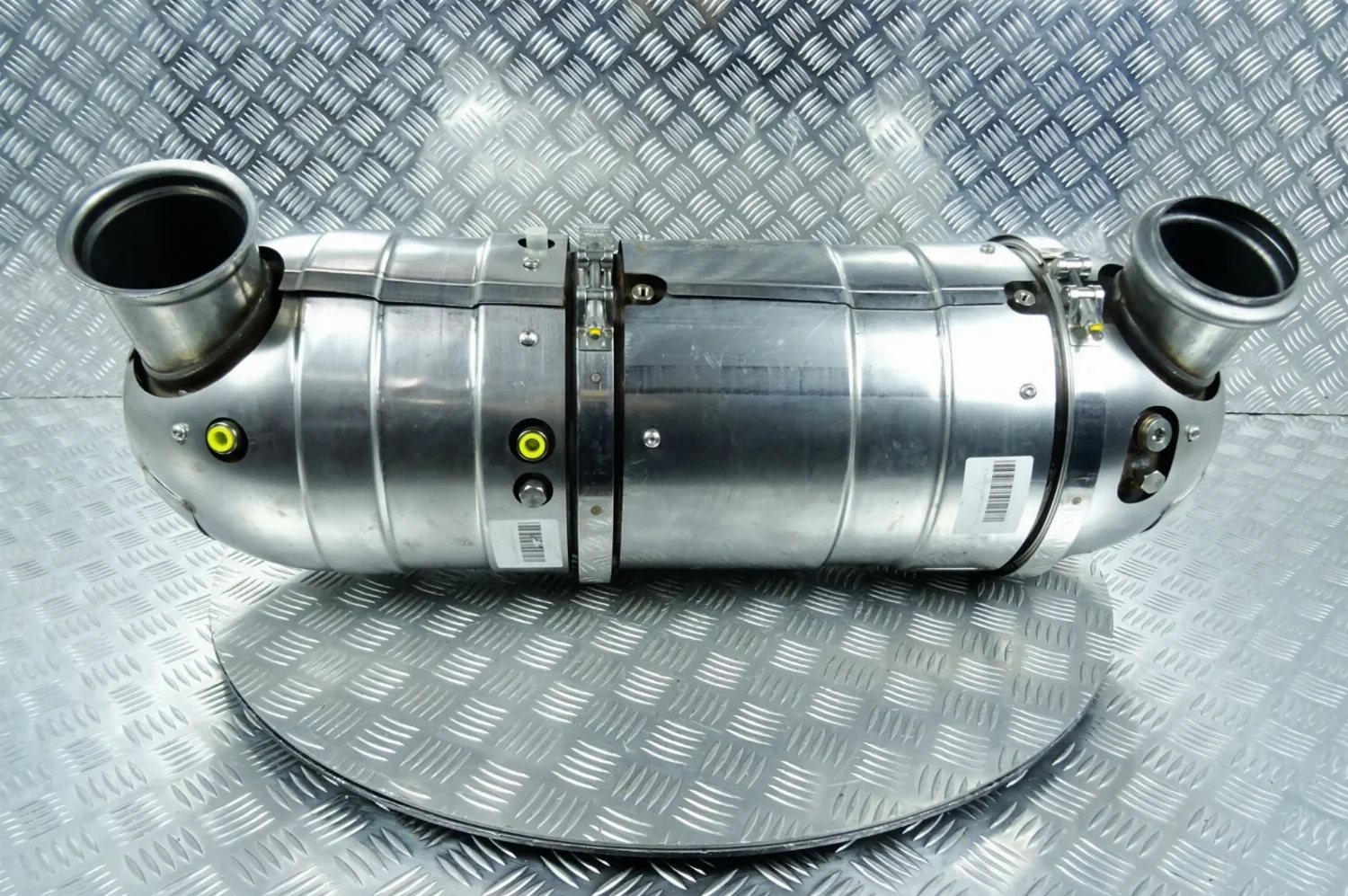
When the diesel particulate filter becomes overloaded, exhaust system backpressure rises dramatically, generating a number of clear warning signs. Both vehicle drivers and machine operators will quickly notice disturbing changes in equipment behavior — from power loss and poor responsiveness to intervention by protective electronics. A dedicated DPF warning light on the dashboard will also indicate a critical soot accumulation level.
The most common symptoms of a blocked filter include:
Noticeable power loss and sluggish throttle response.
Rising engine oil level caused by unsuccessful regeneration attempts while driving.
Increased fuel consumption, especially noticeable under heavy load.
A characteristic smell of unburned diesel fuel around the vehicle.
Activation of emergency mode, often associated with severe engine RPM limitations.
Persistently elevated idle engine speed.
Why Does a DPF Filter Gradually Lose Permeability?
DPF Filter Regeneration
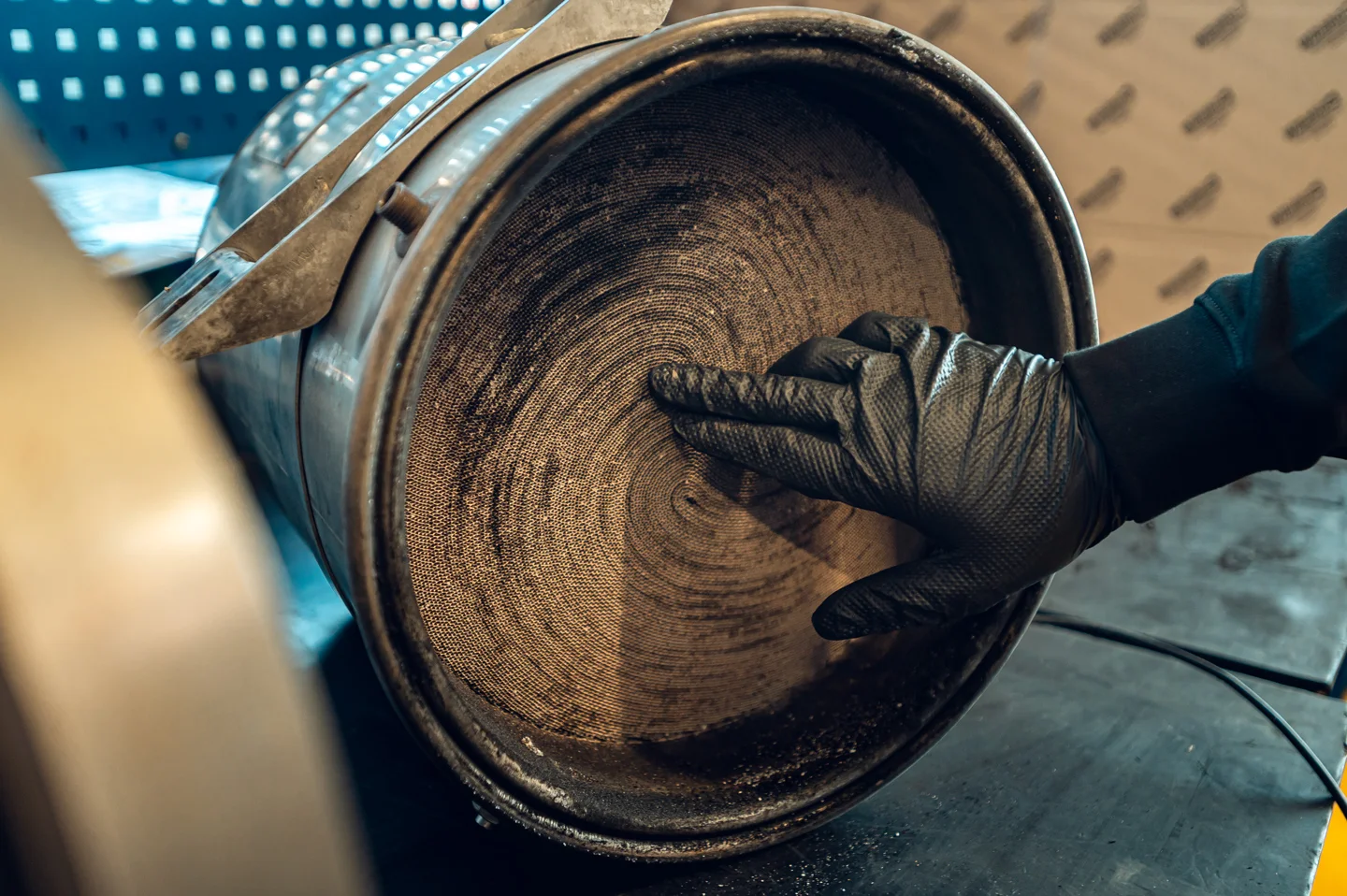
The gradual clogging of a DPF filter is an inevitable side effect of engine operation, during which two completely different substances accumulate inside the filter element. The first is soot, which a properly functioning system can neutralize automatically through regeneration during normal driving. The second is ash — a byproduct that does not burn off and continuously accumulates inside the filter cells. This non-removable material is responsible for irreversible blockage of the exhaust system and the gradual reduction of its efficiency.
Over time, non-combustible ash builds up inside the narrow channels of the ceramic core, drastically reducing the free space for exhaust gases. In extreme cases, it forms a compact and hard barrier in the central part of the monolith, restricting flow even in adjacent areas. Such compressed contamination cannot be removed through thermal methods or commonly available fuel additives. In this case, the only proven and safe solution is professional regeneration of the removed component under workshop conditions.
CAT DPF Filter Service and Repair
Caterpillar DPF Filter Cleaning
We service advanced exhaust aftertreatment systems across the full range of this manufacturer’s equipment, including:
- Tracked and wheeled excavators: e.g. CAT 320, CAT 323, CAT M314, CAT M318
- Wheel loaders: e.g. CAT 950M, CAT 966M, CAT 906
- Tracked bulldozers: e.g. CAT D6, CAT D5
- Rigid and articulated dump trucks: e.g. CAT 725, CAT 730
Volvo DPF Filter Service and Repair
Volvo DPF Filter Cleaning
Swedish machines are known for durability, but their filters also require periodic cleaning. We service, among others:
- Articulated haulers: e.g. Volvo A25G, Volvo A30G, Volvo A40G
- Wheeled and tracked excavators: e.g. Volvo EW160E, Volvo EWR150E, Volvo EC220E, Volvo EC250E
- Wheel loaders: e.g. Volvo L110H, Volvo L120H, Volvo L150H
Liebherr DPF Filter Service and Repair
Liebherr DPF Filter Cleaning
Filters from this brand’s machinery require an extremely precise approach due to operation in demanding conditions. We clean DPF filters in:
- Wheeled and tracked excavators: e.g. Liebherr A 914, Liebherr A 918, Liebherr R 922, Liebherr R 924
- Wheel loaders: e.g. Liebherr L 550, Liebherr L 566 XPower
- Mobile and crawler cranes
Atlas DPF Filter Service and Repair
Atlas DPF Filter Cleaning
We restore exhaust system efficiency in reliable Atlas construction machines:
- Wheeled and road excavators: e.g. Atlas 140W, Atlas 150W, Atlas 160W
- Material handling and industrial machines: e.g. Atlas 160 MH, Atlas 250 MH, Atlas 350 MH
What does hydrodynamic DPF cleaning involve?
It is a completely safe and the most effective method for removing contaminants from the inside of the filter. It involves flushing out accumulated ash and soot using a closed water circuit with the addition of a specialized cleaning agent and compressed air pulses. The process takes place at a controlled temperature (approx. 70°C), which protects the delicate ceramic core from cracking.
Can ash from a DPF filter be burned off while driving or during machine operation?
No. During automatic DPF regeneration (thermal regeneration) in a vehicle, only soot is destroyed. Ash is a non-flammable solid substance that permanently settles in the filter channels. The only way to remove it is to disassemble the component and have it cleaned using the hydrodynamic method at a professional service center.
How long does the DPF filter regeneration process take?
The cleaning, drying, and diagnostics on the testing machine in our workshop usually take anywhere from several to over a dozen hours. In the case of using our mobile service or courier shipping, we strive to complete the entire process – including disassembly, transport, and reassembly – in the shortest possible time to minimize the downtime of the construction machinery.
What are the symptoms of a clogged filter in construction machinery?
The most important signs include a sudden drop in power and poor throttle response, the machine entering limp mode (RPM limitation), an increase in fuel consumption, a rising engine oil level, and the DPF warning light illuminated on the operator's dashboard.