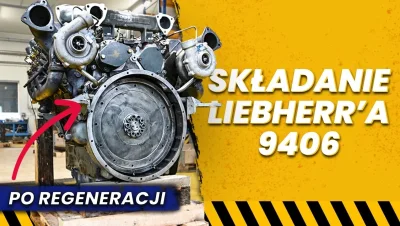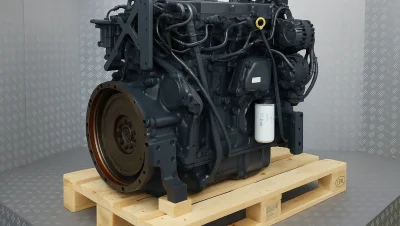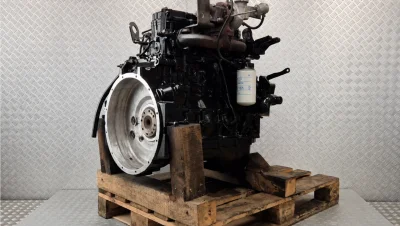


Overhaul of the Liebherr D946 A7 Engine in the Liebherr PR 756 Litronic Crawler Dozer
Comprehensive Service of the Liebherr D946 A7 Engine in the Liebherr PR 756 Litronic Machine
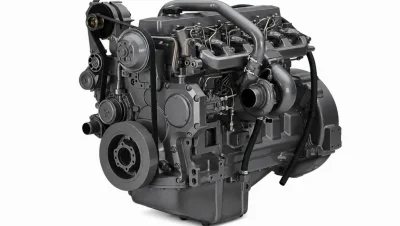
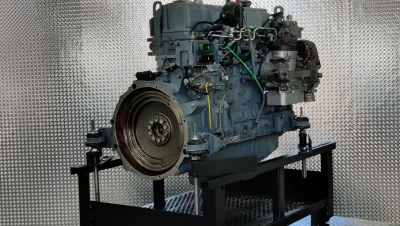
The Liebherr PR 756 Litronic crawler dozer belongs to the category of heavy machinery designed for earthmoving, road construction, open-cast mining, and large-scale infrastructure investments. This model is equipped with a Liebherr D946 A7 diesel engine, a six-cylinder power unit with a displacement of approximately 12 liters and an output reaching 275 kW, engineered to operate under heavy loads for many hours a day. The machine itself reaches an operating weight exceeding 40 tons, which is why engine reliability is of paramount importance for maintaining work continuity on the construction site.
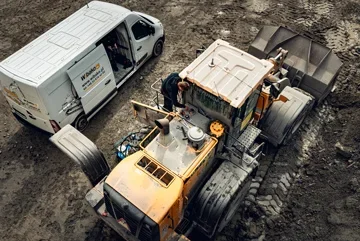
The owner of a Liebherr PR 756 Litronic dozer operating on a road investment project near Kielce contacted our construction machinery service. For several weeks, the operators had observed a gradual increase in engine oil consumption, a drop in power under load, and increased exhaust smoke. Initially, a worn turbocharger was suspected; however, the diagnostics we conducted revealed much more severe wear within the crank-piston system.
Our mobile service carried out an initial inspection of the machine directly at the customer's site. We performed a compression pressure measurement, an analysis of the power unit's operating parameters, and an endoscopic inspection of the cylinders. The results indicated excessive wear on the cylinder liners, pistons, and piston rings. A decision was made to disassemble the engine and transport the unit to our headquarters in Kojszówka, where a full evaluation and major overhaul were carried out.
Diagnostics and Disassembly of the Liebherr D946 A7 Engine
Before starting the disassembly, we prepared full photographic documentation and labeled all cables, electrical connectors, hydraulic lines, and ancillary components. This ensures that the subsequent reassembly proceeds precisely according to the manufacturer's technical documentation.
The process of disassembling the engine in the Liebherr PR 756 Litronic dozer requires proper preparation of the workstation. The customer provided the crane necessary to remove the power unit. Our mechanics disconnected the cooling system, intake pipes, exhaust system, fuel lines, and electrical installation. Special attention was paid to securing the pressure lines and hydraulic system components located within the engine compartment.
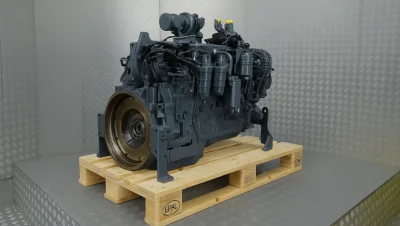
After disconnecting the ancillary components, the radiators, body elements, and engine mounts were disassembled. Then, using the crane, the Liebherr D946 A7 unit was removed from the machine and prepared for transport. The engine was brought to our workshop, where the process of detailed verification of all components began.
Engine Verification After Delivery to the Workshop
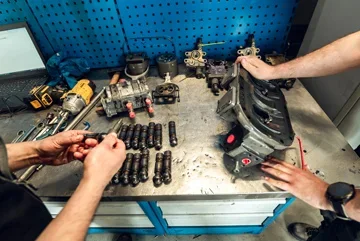
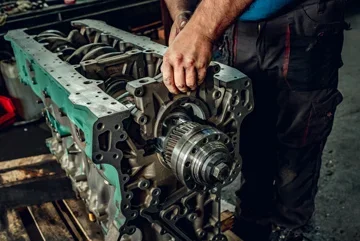
Once the engine was positioned on the overhaul stand, we began dismantling the unit down to the last single part. Already during the disassembly of the cylinder head, signs of blow-by and significant wear on the cylinder working surfaces were visible. Subsequently, the pistons, connecting rods, crankshaft, and accessories were removed.
Verification of the crankshaft included measuring the main and rod journals, checking shaft runout, assessing the condition of the oil channels, and checking the surfaces for signs of overheating. The measurements indicated the necessity of regrinding the crankshaft.
The connecting rods were inspected for twisting, bending, and housing wear. Following the necessary measurements, all elements met the manufacturer's requirements and could be reused.
The cylinder head was disassembled and subjected to a pressure leak test in a heated water bath. No cracks in the casting were found; however, the valve guides and some of the exhaust valves had suffered significant wear.
A verification of the turbocharger was also carried out by checking the radial and axial clearances of the rotor. Despite its correct operation, the customer decided to have the turbocharger remanufactured during the engine overhaul.
Crank-Piston System Repair
The largest scope of work concerned the crank-piston system. In the Liebherr D946 A7 engine, wear of the cylinder liners and piston rings was determined to be the main cause of the increased oil consumption and loss of compression.
The engine block was thoroughly cleaned and prepared for the installation of new liners. Then, a complete set of new cylinder liners, pistons, and piston rings was installed. All components were verified regarding their mounting dimensions.
The crankshaft underwent a grinding process, after which control measurements were performed. New main and rod bearings were installed. Special attention was paid to maintaining the appropriate mounting clearances and tightening torques in accordance with Liebherr service documentation.
Upon completing the assembly of the lower part of the engine, a check of the crankshaft rotational torque and alignment measurements of all components were carried out.
Regeneration of the Liebherr D946 A7 Cylinder Head
Regeneration of the cylinder head included resurfacing the mating surface, replacing the valve guides, replacing worn valves, and machining the valve seats. All components were subjected to a final leak test.
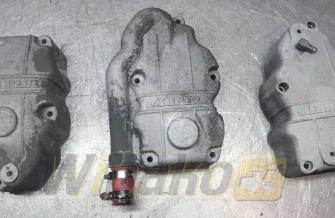
After reassembling the head, the valve clearances were adjusted, and the correct operation of the entire timing system was checked. Additionally, the camshaft was verified for wear on the cams and main journals.
Fuel System and Engine Ancillaries
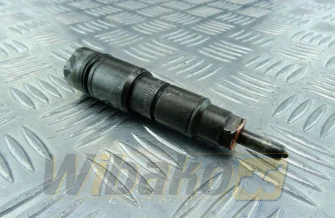
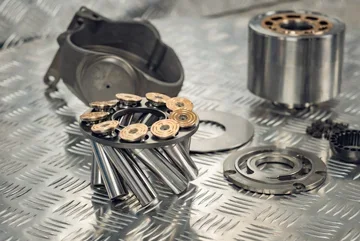
As part of the overhaul, the components of the fuel system were tested. The injectors were checked on a test bench, and their operating parameters were restored to factory values. The fuel pump was tested for performance and tightness.
The turbocharger was also remanufactured. Wear parts were replaced, the rotor was balanced, and bench tests were conducted. The alternator, starter, and engine wiring harness were all thoroughly checked.
All oil and fuel lines were deeply cleaned. Filters, seals, and hoses showing signs of aging were replaced with new ones.
Professional Assembly of the Engine After Overhaul
Following the completion of all overhaul work, the process of reassembling the power unit began. Assembly was conducted in strict accordance with the manufacturer's procedures. Each stage was documented, and all bolted connections were tightened using certified torque wrenches.
After preparing the complete engine, the manifolds, turbocharger, cooling system, electrical accessories, and fuel system components were installed. The engine was then prepared for testing on the engine dynamometer.
Once the bench tests were completed, the unit was transported back to the customer. Installation into the Liebherr PR 756 Litronic dozer was carried out using the crane provided by the machine user. Our mechanics carefully seated the engine in the compartment, mounted the brackets, clutch, cooling lines, fuel lines, charge air lines, and the electrical installation.
After startup, a series of leak tests for the cooling system, lubrication system, and fuel system were performed. Then, an operational trial was conducted with the participation of the machine operator. After confirming the correct operation of the engine, an assembly report was drawn up.
Engine Test on the Dynamometer
One of the most important stages of the entire process was the test on our engine dynamometer. It is precisely the ability to check the engine before installation that constitutes one of WIBAKO's greatest advantages over many workshops performing industrial engine overhauls.
After assembling the Liebherr D946 A7 unit, the engine was mounted on a test stand equipped with an operating parameter monitoring system. Initially, a control start was carried out, and the tightness of all systems was verified. Coolant temperature, oil temperature, oil pressure, boost pressure, and combustion parameters were closely monitored.
For the first dozen or so hours, the engine operated at a load of approximately 20-30% of its nominal value. This stage allows for the correct bedding-in of the mating surfaces of the new crank-piston system components. During this time, our mechanics regularly analyzed operating parameters and performed visual inspections.
The next stage involved a gradual increase in load. The dynamometer allows for a very precise replication of the actual conditions occurring during the operation of the Liebherr PR 756 Litronic dozer. Thanks to this, we can check the behavior of the engine while it works at high torque and high power demand.
During the testing process, multiple load cycles are performed to evaluate the stability of the operating parameters. We analyze the unit's reaction to sudden changes in load, check operating temperatures, pressures, and exhaust emissions. This makes it possible to detect even minor irregularities before mounting the engine back into the machine.
After completing the full test program, a re-inspection of the filters and operating parameters was carried out. The results confirmed that the required operating parameters were achieved and that the unit is fully ready for operation. This process significantly reduces the risk of problems after installation and allows the customer to return the machine to service much faster.
The engine dynamometer also allows for the archiving of test results. Thanks to this, the customer receives confirmation of the tests performed along with detailed information regarding the parameters achieved by the engine after the overhaul. This is particularly important for machines working on large contracts, where every hour of downtime generates substantial costs.
Post-Overhaul Maintenance Service
Every Liebherr D946 A7 engine is covered by a warranty after our overhaul. After the first 50 operating hours, our mechanics perform a service inspection including filter replacement, leak checks, connection verification, and an evaluation of engine operation under load.
We recommend performing subsequent inspections every 250 operating hours, but no less frequently than once every three months. Regular maintenance allows maintaining the high durability of the power unit and reduces the risk of unplanned breakdowns.
Machines Utilizing the Liebherr D946 A7 Engine
The Liebherr D946 A7 engine is utilized in many heavy construction and mining machines. This unit can be found, among others, in Liebherr PR 756 Litronic crawler dozers, selected wheel loaders, material handling machines, and other specialized Liebherr equipment.
Thanks to their high durability and high torque, these engines are perfectly suited for applications requiring many hours of operation under high load conditions.
Summary of the Liebherr D946 A7 Engine Overhaul
The completed overhaul of the Liebherr D946 A7 engine in the Liebherr PR 756 Litronic crawler dozer allowed for restoring the full efficiency of the machine and eliminating the problem of excessive oil consumption and power drop. The scope of work included comprehensive verification, repair of the crank-piston system, regeneration of the cylinder head, fuel system control, ancillary component remanufacturing, and dyno testing.
Thanks to the combination of our mechanics' experience, excellent workshop facilities, and a professional engine dynamometer, the customer received a power unit prepared for many years of operation. We perform overhauls, regenerations, and servicing of Liebherr engines and other manufacturers used in construction machinery throughout Poland.
Internal links:
Liebherr engine overhauls
Crawler dozer service
WIBAKO engine dynamometer
Mobile service for construction machinery
Overhaul of the Liebherr D946 A7 engine in the Liebherr PR 756 Litronic dozer
Do you need repair, rebuilding, or servicing of a Liebherr D946 A7 engine? WIBAKO performs comprehensive engine overhauls for Liebherr PR 756 Litronic dozers, including tests on an engine dynamometer and installation at the customer's site.