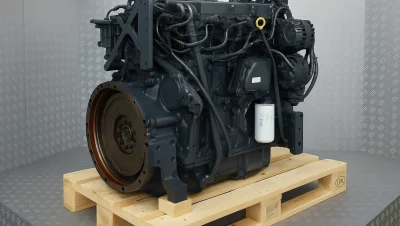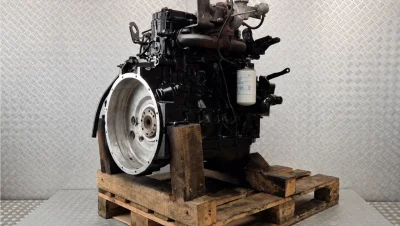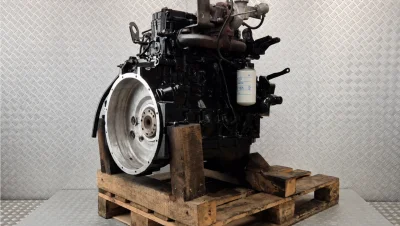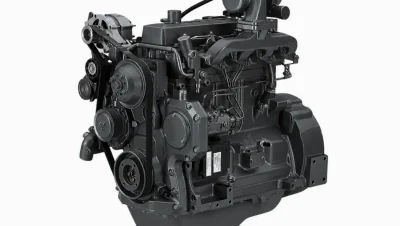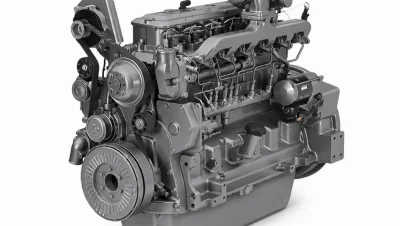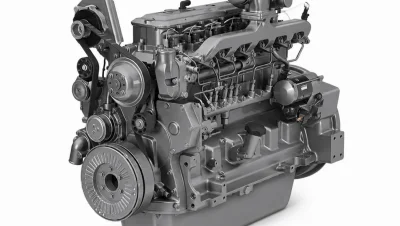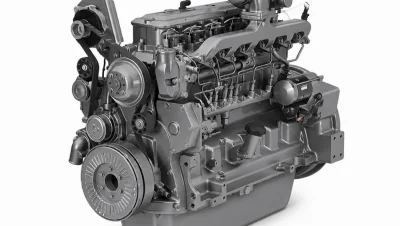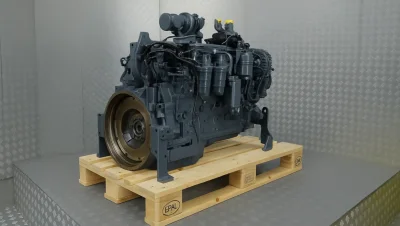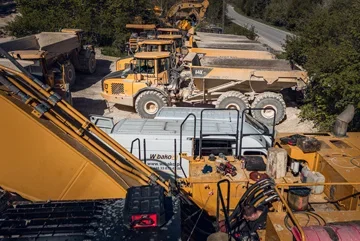


Overhaul of the Liebherr D946 A7 Engine in a Liebherr L 580 Wheel Loader
Comprehensive Service for the Liebherr L 580 Wheel Loader
The Liebherr L 580 wheel loader is one of the most recognizable machines used in heavy material handling operations, recycling plants, quarries, and bulk material transport companies. This model is valued for its high hydraulic system efficiency, strong breakout force, and the economical hydrostatic drive characteristic of Liebherr machines. In this project, we carried out a complete overhaul of the Liebherr D946 A7 engine installed in this machine.
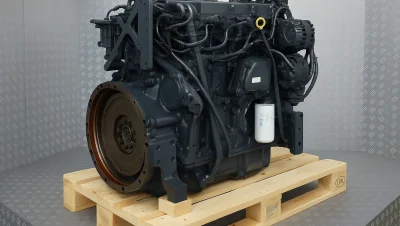
The Liebherr D946 A7 engine is a six-cylinder diesel power unit with a large displacement, designed to operate in demanding industrial and construction environments. These engines often work for many hours per day under heavy load, which is why a professional engine overhaul becomes necessary after high operating hours or improper maintenance.
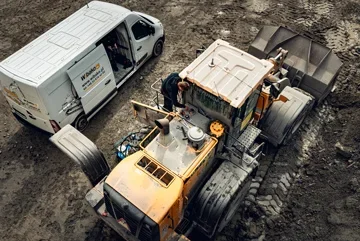
The machine operated in the Silesian Voivodeship near Katowice during aggregate loading operations. The operator reported a gradual loss of power, increased oil consumption, and intense blue smoke under load. Additional issues included difficult starting after longer downtime periods. Our mobile construction equipment service team performed diagnostics directly at the customer’s site.
During diagnostics, we performed a compression pressure test, engine parameter analysis, and intake system inspection. The results indicated significant wear of the cylinders and pistons. We also carried out an endoscopic inspection of the cylinder interiors, which confirmed scratches on the cylinder liners and signs of combustion gas blow-by. After determining the scope of work, the decision was made to remove the engine and transport it to our workshop in Kojszówka.
Removal of the Liebherr D946 A7 Engine from the Liebherr L 580 Loader
The engine removal was carried out by our mobile service team using a crane provided by the customer. The process began with securing the machine and disconnecting the electrical system. Our mechanics then removed the engine accessories, hydraulic lines, cooling system, and air intake components.
In the Liebherr L 580 wheel loader, access to the engine requires precise labeling of all hoses and electrical connections. Particular attention was paid to protecting the cooling system and fuel lines against contamination. The radiators, pressure hoses, manifolds, and exhaust system were removed.
After preparing the engine for removal, the engine mounts, coupling, and drivetrain components were disconnected. The Liebherr D946 A7 engine was then removed from the engine compartment and prepared for transport. At this stage, visible oil blow-by and heavy contamination of the intake system caused by years of operation were already noticeable.
After delivering the engine to our workshop, we began detailed technical documentation and verification of all components. Every part was labeled to maintain full control over the repair process.
Inspection of the Liebherr D946 A7 Engine in the Workshop
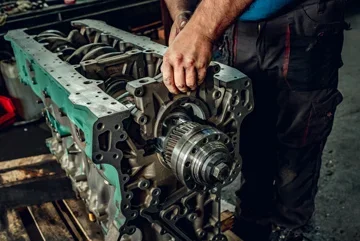
The inspection process began with complete engine disassembly. All parts underwent industrial cleaning and precise dimensional inspection. Already during piston removal, clear signs of wear on the working surfaces and excessive clearance between pistons and cylinder liners were visible.
The crankshaft inspection included measurement of the main and connecting rod journals, checking the oil passages, and verifying crankshaft runout. Despite visible operational wear, the crankshaft was suitable for reconditioning through grinding.
We also carried out a complete inspection of the connecting rods. Dimensions, alignment, and the condition of connecting rod bolts were checked. Several components showed signs of overheating caused by insufficient lubrication under heavy load.
The cylinder head inspection included a pressure test in a heated water bath and valve seat inspection. We identified worn valve guides and leaking exhaust valves. The camshaft was also inspected, and its lobes showed wear typical of engines operating for many thousands of engine hours.
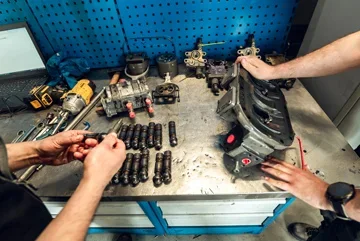
The fuel system was sent for specialized diagnostics. The injectors were tested on a calibration bench, and the injection pump was checked for fuel delivery and proper dosing.
The turbocharger was also inspected. Excessive radial play and signs of oil leakage into the intake system were detected. For this reason, the turbocharger was sent for rebuilding.
Reconditioning of the Crank-Piston Assembly
Repairing the crank-piston assembly was one of the most important stages of the Liebherr D946 A7 engine overhaul. The engine block was measured and prepared for installation of new cylinder liners. New pistons, piston rings, and a complete set of main and connecting rod bearings were installed.
The crankshaft underwent a grinding process and was rechecked dimensionally. After reconditioning, new bearings were installed, and assembly clearances were checked according to the manufacturer’s service documentation.
The connecting rods were checked for bending and twisting. After measurements, new piston pin bushings and a complete set of connecting rod bolts were installed. All crank-piston assembly components were balanced and prepared for operation under full load.
During engine assembly, our mechanics paid special attention to installation accuracy and correct tightening torques. Liebherr engines operating in wheel loaders are exposed to high dynamic loads, so every assembly stage directly affects long-term durability.
Reconditioning of the Cylinder Head and Fuel System
The cylinder head underwent comprehensive rebuilding. The mating surface was resurfaced, valve guides were replaced, and new valves were installed. After machining, a leak test was carried out in a heated water bath.
The valve seats were machined according to manufacturer specifications. After completion, we performed a leak test on every cylinder. This allowed us to achieve proper compression across all cylinders.
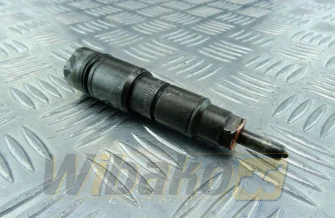
The injection pump was rebuilt by a specialized workshop cooperating with our service department. After rebuilding, the fuel dosing parameters were calibrated. The injectors received new nozzles and were adjusted on a test bench.
Fuel system repair in Liebherr D946 A7 engines is extremely important for proper engine operation. Incorrect fuel dosing may lead to excessive combustion temperatures and accelerated wear of pistons and cylinder liners.
Reconditioning of Engine Accessories
During the overhaul, we also performed comprehensive rebuilding of the engine accessories. The turbocharger was disassembled, cleaned, and equipped with a new repair kit. After rebuilding, rotor balancing and leak testing were performed.
The alternator and starter motor underwent electromechanical inspection. Worn bearings, brushes, and consumable components were replaced. The engine electrical system was also inspected.
The cooling system was thoroughly cleaned. Flexible hoses, thermostats, and the coolant pump were replaced. This restored proper cooling performance of the power unit.
We also replaced intake system components, seals, and air hoses. Intake system tightness is crucial for proper turbocharger operation and maintaining correct combustion parameters.
Professional Assembly of the Liebherr D946 A7 Engine
After completing all rebuilding work, we began the engine assembly process. Every component was installed according to the manufacturer’s service documentation and with the use of specialized measuring tools.
During assembly, particular attention was paid to proper timing system alignment and valve clearance adjustment. A complete set of new seals and mounting bolts was used. All connections were properly secured against possible leaks during future operation.
After assembly, the lubrication system was prefilled with oil and the engine was prepared for its first startup. The mechanics checked the operation of the lubrication system and the tightness of all connections.
The engine was then installed on our engine dynamometer. Our test bench allows long-duration load testing and monitoring of engine operating parameters before installation in the machine. This enables us to verify the quality of the repair before transporting the engine back to the customer.
Testing the Liebherr D946 A7 Engine on the Engine Dynamometer
One of the most important stages of the entire process was testing on the engine dynamometer. Our company is among the few diesel engine service centers equipped with its own dynamometer capable of fully loading industrial engines after overhaul.
After the first startup, the Liebherr D946 A7 engine operated for several hours under approximately 20–30% of nominal load. During this period, we monitored operating temperature, oil pressure, combustion parameters, and system tightness.
After the break-in stage, multiple full-load tests were performed. The dynamometer allows us to simulate real operating conditions of the Liebherr L 580 wheel loader, making it possible to detect even minor irregularities.
During testing, we monitored:
- oil pressure under different load ranges,
- coolant temperature,
- exhaust gas temperature,
- fuel system stability,
- turbocharger response,
- tightness of oil and cooling systems,
- overall engine operating smoothness.
Dynamometer testing is extremely important for engines used in construction equipment. Wheel loaders often operate in harsh environments with heavy dust and high loads. Thanks to these tests, we can confirm that the engine achieves correct operating parameters before installation in the machine.
After testing, we replaced the oil and control filters. The engine was then inspected again for metal particles and possible leaks. All operating parameters were within the manufacturer’s specifications.
The engine dynamometer also allows documentation of engine operating parameters. The customer receives confirmation of the tests performed and proof of proper engine operation after overhaul. This is a very important part of professional diesel engine service for construction machinery.
Installation of the Engine in the Liebherr L 580 Wheel Loader
After completion of testing, the engine was transported back to the customer near Katowice. Installation was carried out using a crane provided by the machine owner. The installation process was completed by our mobile service team.
During installation, we thoroughly cleaned the engine compartment and inspected the hydraulic hoses and electrical system. Damaged air hoses and mounting components were replaced.
The engine was installed according to manufacturer standards. The cooling system, fuel system, hydraulic lines, and electrical system were then connected. Every connection was checked for leaks.
After installation, we performed the first startup procedure. Our mechanics monitored engine parameters and machine response under load. In the presence of the operator, test drives and working tests during material loading were carried out.
Positive test results allowed us to sign the installation report and return the machine to operation.
Post-Overhaul Service Support
Every engine overhaul performed by WIBAKO is covered by warranty and includes the possibility of ongoing service support. After 50 engine hours, our mechanics perform the first inspection, including filter replacement, leak inspection, and checking all connections between the engine and the machine’s other components.
Subsequent inspections are performed every 250 engine hours or at least every 3 months. Regular maintenance extends engine lifespan and reduces the risk of costly breakdowns.
Machines Equipped with the Liebherr D946 A7 Engine
The Liebherr D946 A7 engine is used in many Liebherr construction and industrial machines. These engines can be found in wheel loaders, material handling machines, and selected equipment operating in demanding industrial environments.
Thanks to their high torque output and durability, these engines are widely used in machines designed for continuous operation. Proper servicing of Liebherr diesel engines allows many years of reliable operation even under intensive use.
Summary of the Liebherr D946 A7 Engine Overhaul
The comprehensive overhaul of the Liebherr D946 A7 engine in the Liebherr L 580 wheel loader restored full machine performance and eliminated problems related to power loss and excessive oil consumption.
Thanks to the complete rebuilding of the crank-piston assembly, cylinder head repair, fuel system rebuilding, and engine dynamometer testing, the customer received a fully verified power unit prepared for many more years of operation.
WIBAKO provides comprehensive construction equipment service, Liebherr diesel engine overhauls, and mobile engine removal and installation services throughout Poland.
Liebherr Engine Service
Wheel Loader Service
WIBAKO Engine Dynamometer
Mobile Construction Equipment Service
Contact Us
Need an overhaul of a Liebherr D946 A7 engine or service for a Liebherr L 580 wheel loader? Contact WIBAKO - we provide comprehensive repairs, mobile engine removal and installation, and engine dynamometer testing.