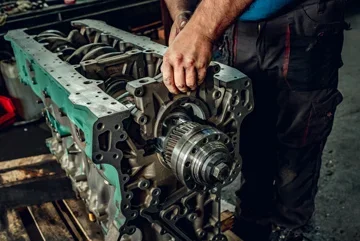


Overhaul and repair of internal combustion engines
Does your engine need repair? Contact us and restore it to full performance
-
Phone
+48 33 870 42 00
Call us -
WhatsApp
+48 532 161 000
Message on WhatsApp -
E-mail
biuro@wibako.pl
Send an e-mail
Put your engine in the hands of professionals
Overhaul and repair of internal combustion engines
We specialize in the diagnostics and overhaul of industrial engines. We offer mobile service, a wide selection of parts, and replacement engines, which, combined with over 20 years of experience, guarantees the highest quality of services. Facing a breakdown? Noticing worrying symptoms in your engine's operation? Call us – we will help you get back to work quickly.
Over 3 decades of industry experience
Professional diagnostics, repair, and remanufacturing of internal combustion engines
Wibako is a place where passion for technology meets years of experience in internal combustion engine service. We specialize in the diagnostics, repair, and comprehensive remanufacturing of power units from leading manufacturers such as CUMMINS, DEUTZ, CATERPILLAR, VOLVO, LIEBHERR, IVECO, PERKINS, KOMATSU, and MERCEDES. Thanks to our perfectly equipped technical facilities and a team of qualified mechanics, we are able to restore full efficiency to even the most advanced designs. Every service process is based on precise diagnostics combined with thorough verification of the engine's technical condition – this is the foundation of an effective and lasting repair. During remanufacturing, we use the highest quality spare parts and components, ensuring long-term reliability and the restoration of factory operating parameters. This approach translates not only into the highest quality of workmanship but also into the timeliness of the services provided, which is appreciated by our customers from all over the world.
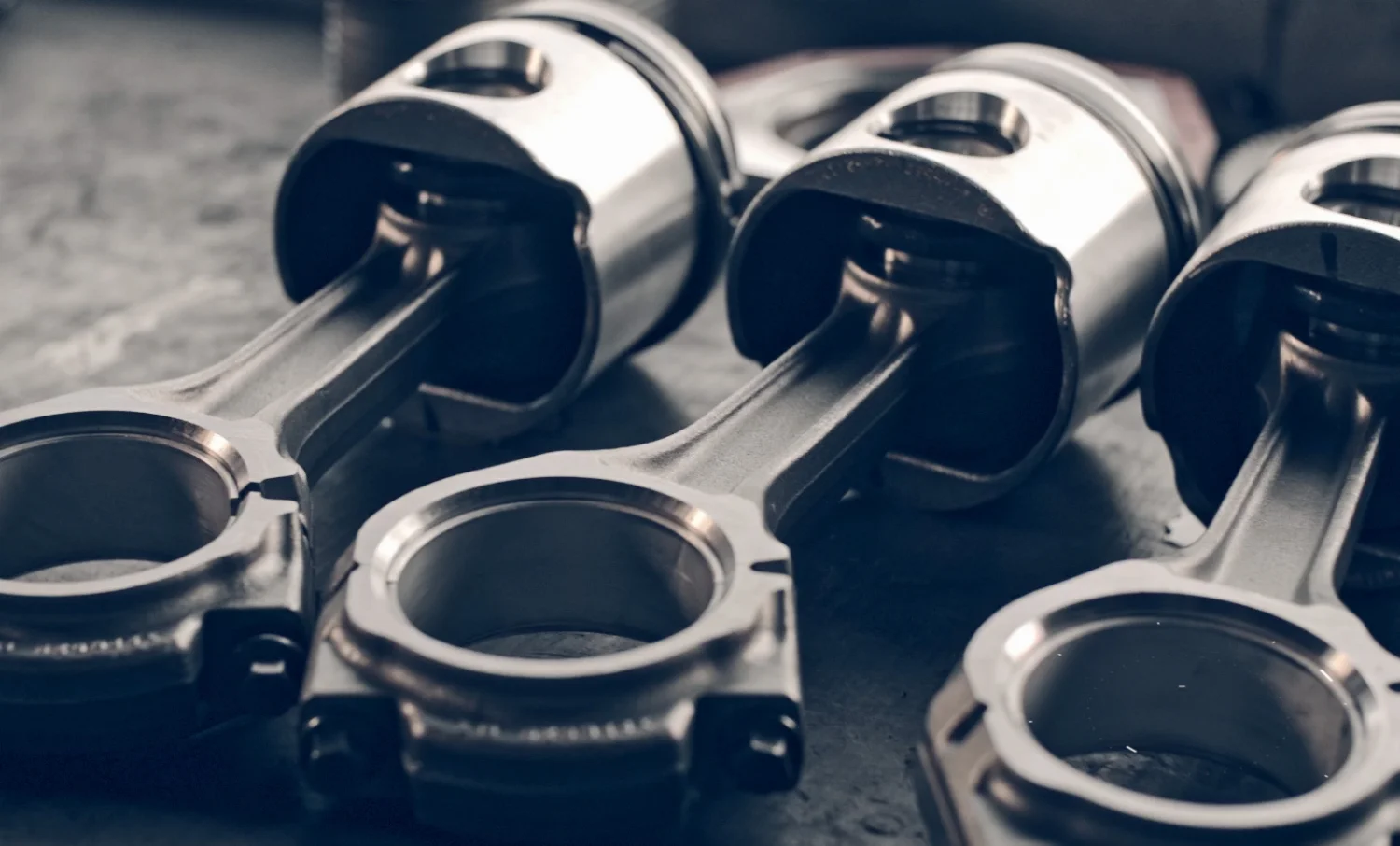
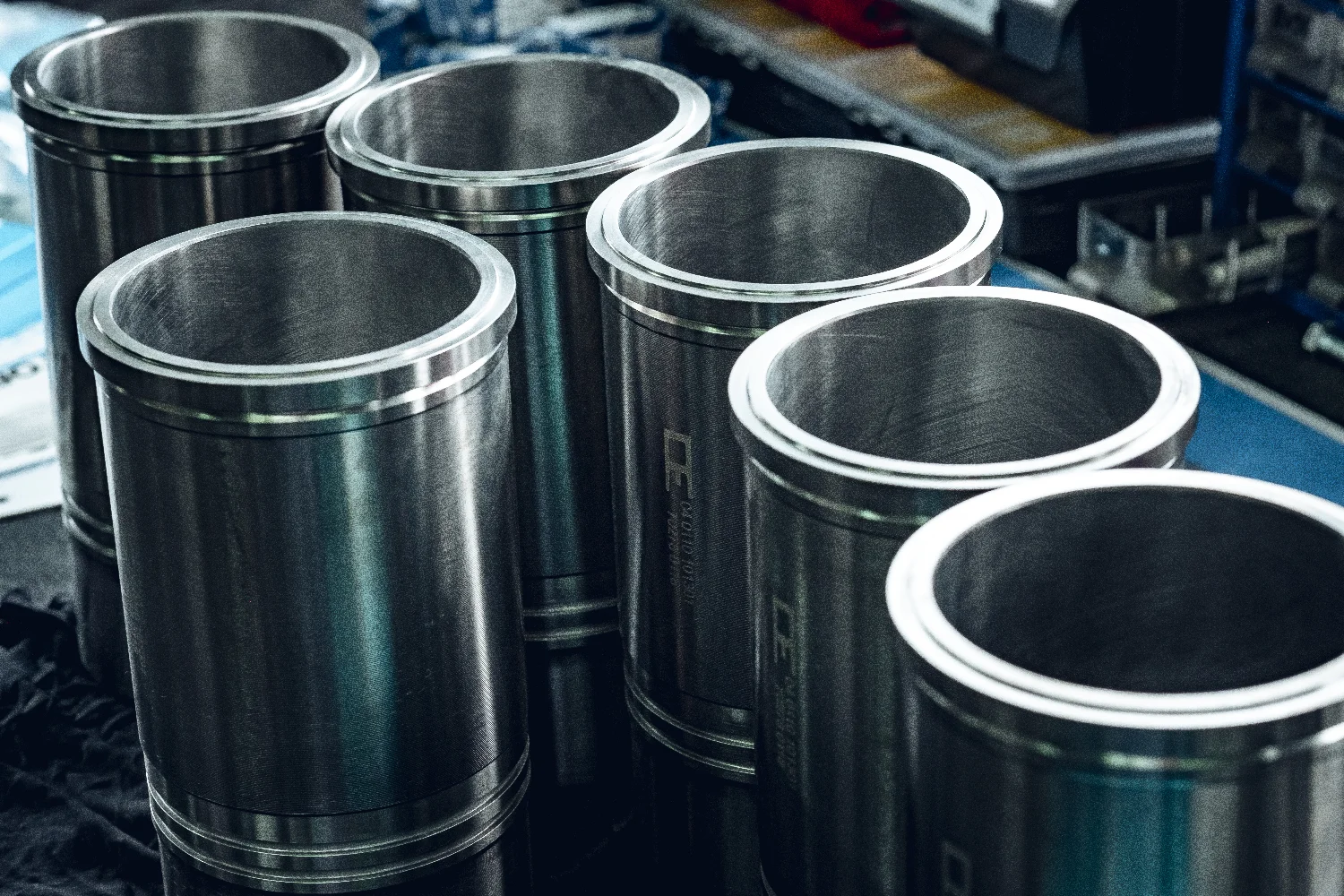
An engine doesn't break down "suddenly" - learn to recognize the warning signals
Symptoms of a damaged engine
Many construction machinery owners believe that engine failure is a sudden and unpredictable event. The truth, however, is different: an internal combustion engine, much like a pump or a hydraulic cylinder, almost always sends warning signals well in advance. The key to avoiding massive costs and downtime on the construction site is operator vigilance. Ignoring early symptoms is a direct path from an inexpensive seal replacement to a costly major overhaul.
Alarm signals: What should worry you?
Before a serious failure occurs, the machine begins to behave "unnaturally." As a professional construction machinery engine service, we advise reacting immediately if you notice:
Abnormal exhaust color:
White, blue, or black exhaust can indicate problems with ignition, oil burning, or an excessively rich fuel mixture. It is worth paying attention to its density and duration.
Excessive oil consumption:
Regularly topping up oil between changes may indicate wear on piston rings, valve seals, or the turbocharger.
Mixing of operational fluids:
The presence of oil in the coolant or vice versa is a signal of serious failure, e.g., a damaged head gasket or a cracked cooler.
Low oil pressure:
The oil warning light turning on or a drop in pressure can lead to engine seizure. Causes include oil pump failures, leaks, or worn moving parts.
Disturbing noises:
Knocking, rattling, scraping, or other metallic sounds can indicate problems with bearings, valves, timing, or accessories.
Difficult cold starting:
Often related to poor glow plug performance (in diesels) or battery/starter issues.
Difficult hot starting:
This problem is often characteristic of a worn injection pump in older diesels or issues with crankshaft/camshaft position sensors. It indicates that after warming up, a component loses its efficiency (e.g., its resistance or tightness changes).
Performance drop under heavy load:
A machine that previously worked smoothly starts to "choke" or loses power at key moments of operation.
Slowed working functions:
Although hydraulics are often blamed, the cause may be a drop in engine torque, which is unable to provide sufficient energy to the pumps.
Uneven operation and lack of stability:
The engine "hunts" (fluctuating RPM), works louder than usual, or generates unusual vibrations that transfer to the entire structure.
Delayed response to controls:
A lack of immediate response to signals sent from the operator's cabin is often a sign that the fuel system or engine control requires immediate intervention.
Vibrations and lack of power:
Misfires, problems with compression or the turbocharger cause uneven operation and a noticeable drop in power.
Starting problems:
The engine is hard to start when cold or hot – this may indicate weak glow plugs, problems with the injection pump, battery, or crankshaft sensors.
Engine overheating:
The engine heats up faster than usual, which may indicate a lack of coolant, a water pump failure, a thermostat issue, or a clogged cooling system.
Experienced technicians and reliable equipment
Mobile service for internal combustion engines
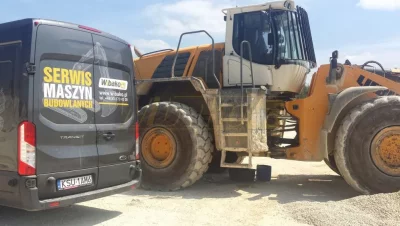
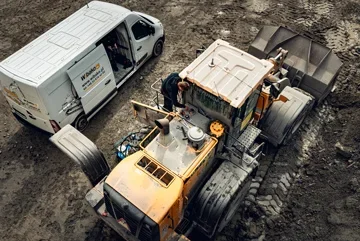
We have a modern fleet of mobile service vehicles, where each unit is equipped with specialized diagnostic equipment and tools necessary for mechanical and hydraulic repairs. Our qualified technicians travel to customers throughout Poland, providing fast and effective help even in the event of sudden breakdowns in the field or the inability to transport the machine. On-site, we perform precise diagnostics, eliminate faults, and, if necessary, efficiently dismantle damaged components to restore the machine to full efficiency as quickly as possible.
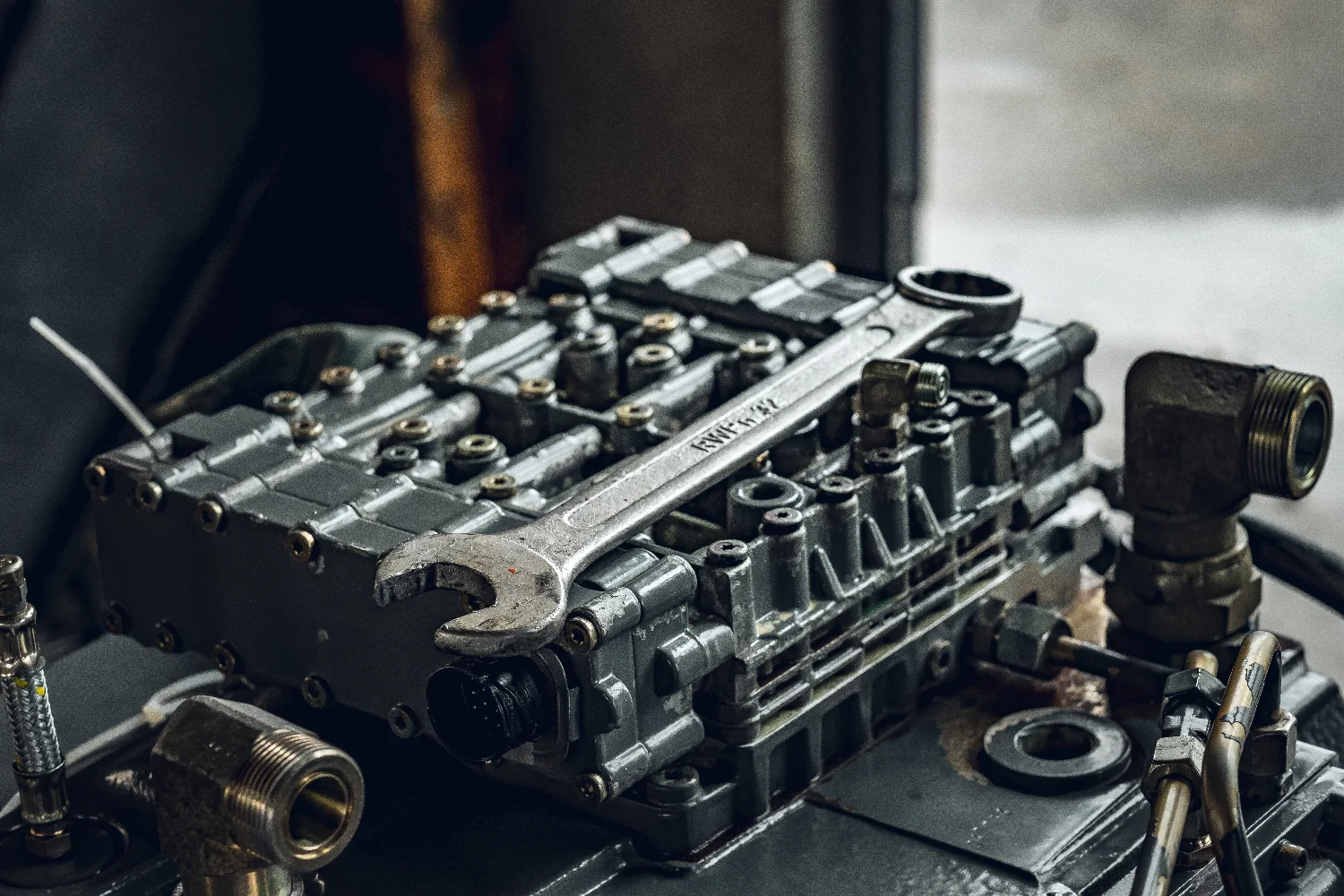
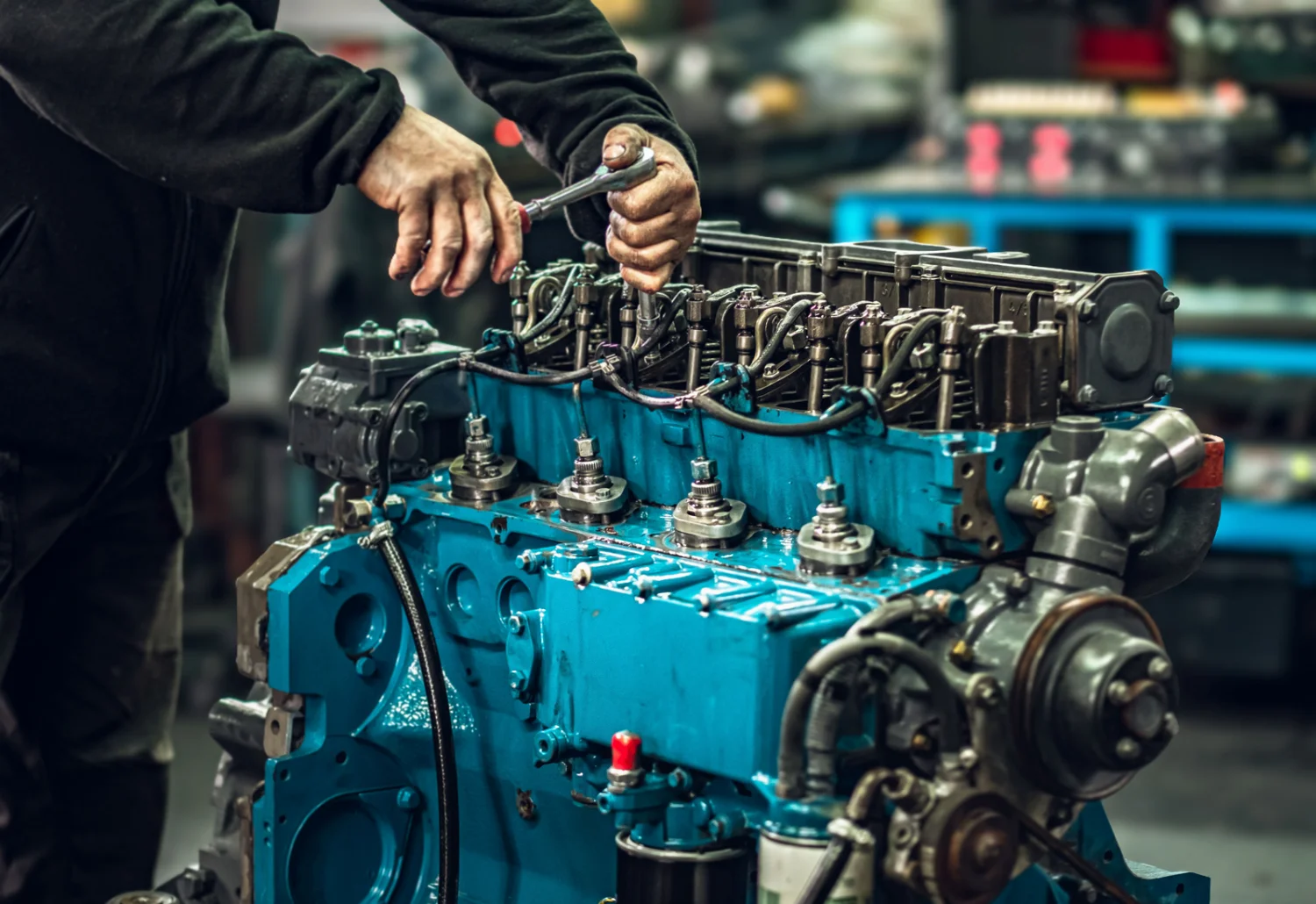
Expert knowledge and over a dozen years of experience
Why early engine diagnostics pays off?
At an early stage, when a fault first appears, the repair is usually limited to the replacement or remanufacturing of consumable components (e.g., injectors, turbocharger, or seals). The cost of such an operation is a fraction of the price of a full overhaul. Ignoring these "silent requests" for help from the engine leads to a chain reaction. Continued work on damaged components leads to the degradation of cylinder liners, the crankshaft, and in extreme cases - serious contamination of the entire hydraulic system with metal shavings. Then, it's not just the engine overhaul at stake, but the efficiency of the entire machine.
We offer overhauls, repairs, and mobile service
Comprehensive repair of internal combustion engines
In our workshop, every internal combustion engine overhaul is carried out in accordance with the highest technical standards, with full transparency at every stage of the work. Our goal is not only to restore the power unit to full efficiency but also to ensure long-term reliability and safety in operation.
Verification and diagnostics - the foundation of repair quality
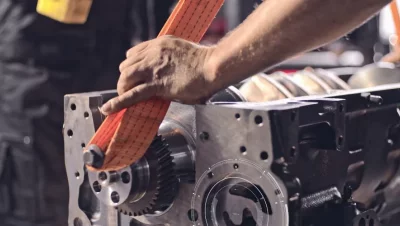
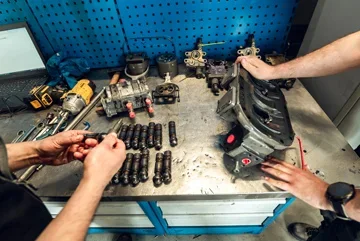
We begin the remanufacturing process with detailed diagnostics and technical verification of the engine. Every unit arriving at our workshop is dismantled into its individual parts, and all components are subjected to individual assessment for wear, damage, and factory parameters. This allows us to precisely determine which elements are suitable for remanufacturing and which require replacement, minimizing the risk of recurring faults.
Individual offer and cost estimate - full transparency for the customer
Every overhaul is unique, which is why we prepare a detailed, personalized offer.
The cost estimate includes:
- Engine type and model
- Degree of wear and operational history of the unit
- Scope of necessary repair and remanufacturing work
The customer receives a complete overhaul plan along with a valuation, and we start work only after approval, which guarantees full control over costs and the scope of services.
Remanufacturing and assembly process - precision at every stage
Engine remanufacturing in our service is a combination of modern technologies, specialized equipment, and the years of experience of our mechanics. As part of the work, we perform:
Remanufacturing of key components - restoration of the crankshaft, camshaft, heads, connecting rods, or turbocharger, while maintaining factory parameters.
Replacement of worn or damaged elements – all consumable parts, such as bearings, rings, or seals, are replaced with brand new ones, and critical engine components receive the highest quality materials and certified spare parts.
Process documentation - every repair activity is recorded photographically, allowing the customer to track the progress of work and increasing the transparency of the entire process.
Quality control and final tests - a guarantee of safety and reliability
After assembly is complete, the engine undergoes rigorous testing on an engine dynamometer.
We check, among other things:
- Tightness of all systems
- Operating parameters under various loads
- RPM stability and performance in conditions close to real operation
This gives us the certainty that every unit leaving our workshop works in accordance with or exceeds factory parameters, minimizing the risk of failure during use.
Warranty and professionalism - customer safety
We provide a 12-month warranty on all work performed, ensuring full protection and peace of mind for our customers. Thanks to the combination of experience, precise procedures, and modern equipment, we can offer engine remanufacturing at a level comparable to new factory units.
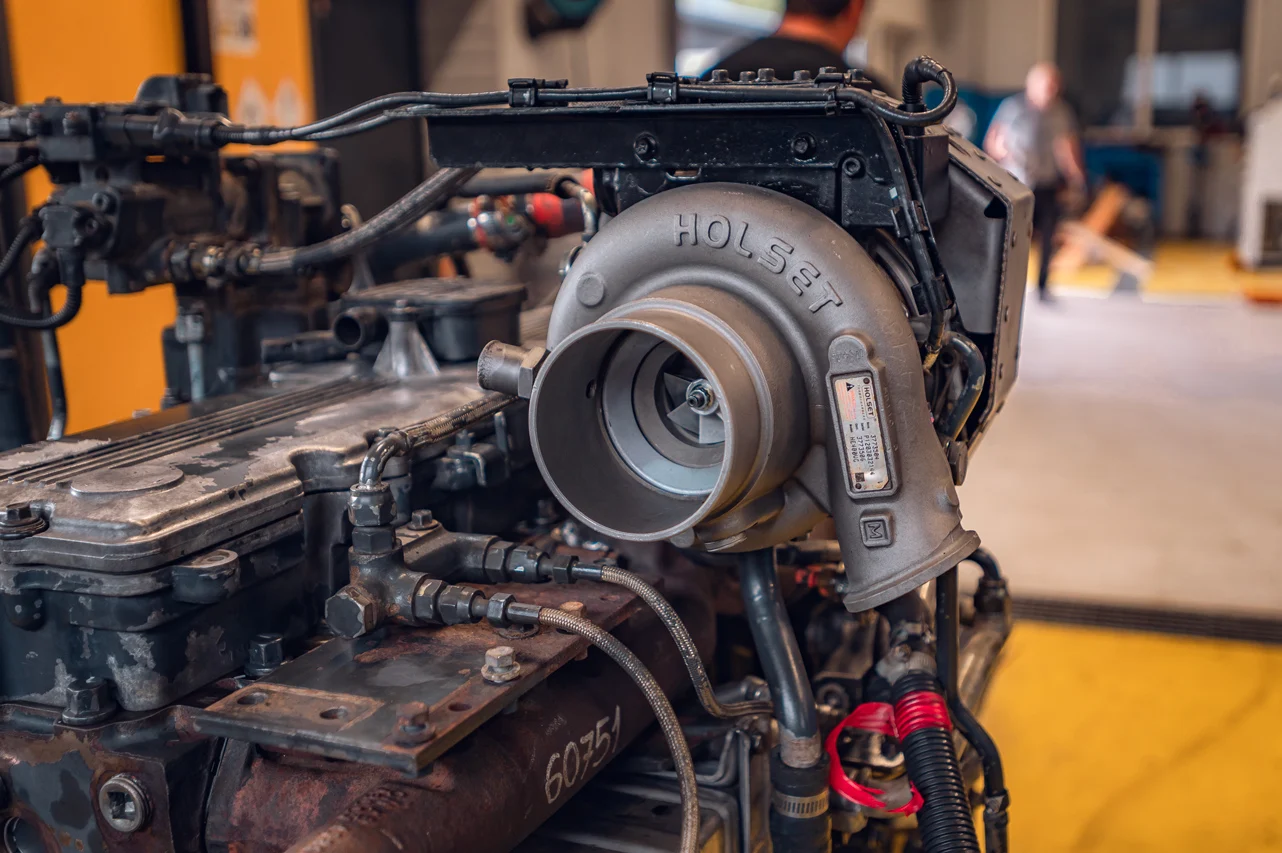
Engine repair and overhaul
How much does an engine overhaul cost?
The price of an engine overhaul is an individual matter, as it depends on many factors, such as the unit model, its design, the number of operating hours, general technical condition, and the extent of the damage. Every engine wears differently. To prepare an accurate and reliable valuation, it is necessary to deliver the engine to our service center, where we conduct detailed diagnostics. We check the degree of wear of elements, measure key parameters, and assess which components require remanufacturing or replacement. Only after this analysis are we able to provide the full cost of the overhaul along with the scope of necessary work. The customer receives a full picture of the engine's condition and, on this basis, decides whether they want to continue the process. If the presented valuation does not meet their expectations, they can opt-out of the overhaul.
Trust the professionals
How long does a major engine overhaul take?
The lead time depends on the type of engine, the availability of parts, and the extent of the damage. Typically, an overhaul takes from a few days to a few weeks. For popular units, it is also possible to use a replacement engine, which significantly shortens machine downtime.
Experienced service team
What does a general overhaul of an internal combustion engine involve?
A general engine overhaul is a comprehensive process of rebuilding the power unit, aimed at restoring its full technical efficiency and operating parameters to near-factory levels. This type of repair is most often performed in cases of severe engine wear, seizure, loss of power, excessive oil consumption, or failure of key components.
The process begins with the complete disassembly of the engine and a detailed diagnostic of all elements. Every part is thoroughly checked for wear, damage, and its suitability for further use. Verification covers the engine block, cylinder head, crankshaft, camshaft, pistons, cylinder liners, and the crank-piston system, among others.
After the work is finished, the engine is assembled according to the manufacturer's specifications and subjected to control tests. In professional service centers, the unit also undergoes load tests on a dynamometer, which allow for checking oil pressure, operating temperature, system tightness, and achieved performance parameters.
A properly executed general overhaul significantly extends the engine's lifespan, reduces the risk of future failures, and restores the construction machine for intensive work in demanding operating conditions.
Warranty that provides certainty
Warranty - up to 24 months of security
We know that a general overhaul is an investment for years, which is why we are one of the few service centers on the market to offer warranty protection lasting up to 24 months.
Security: A long warranty period is proof for you that we are confident in every bolt and gasket we have installed in your engine.
Individual approach: We tailor the warranty conditions to the scope of the order – from a standard warranty for general overhauls to extended protection packages with full Wibako service support.
Certainty from the dynamometer: Used and verified engines receive a start-up warranty from us, preceded by a rigorous load test.
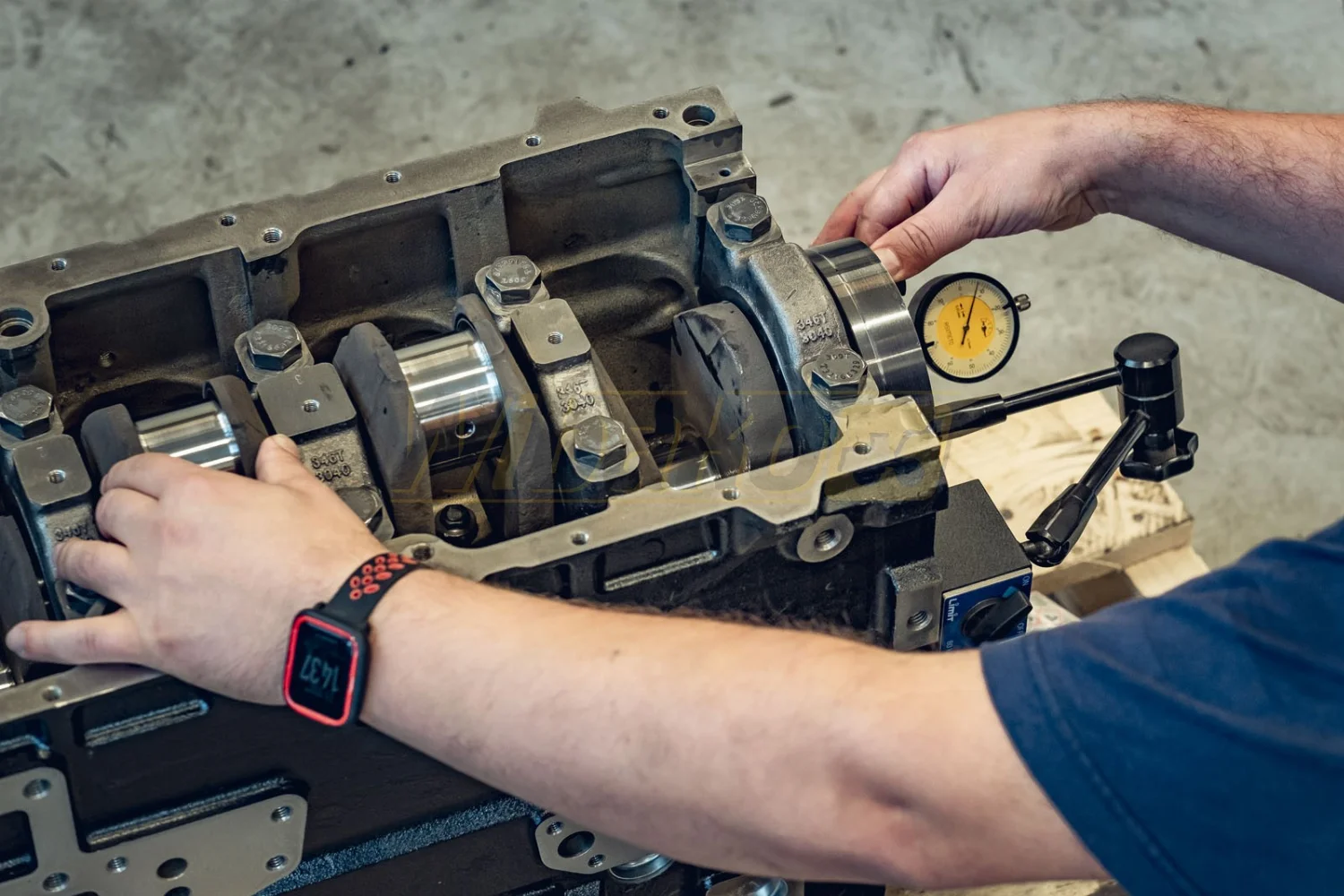
Quality control of your engine
Testing internal combustion engines on a dynamometer
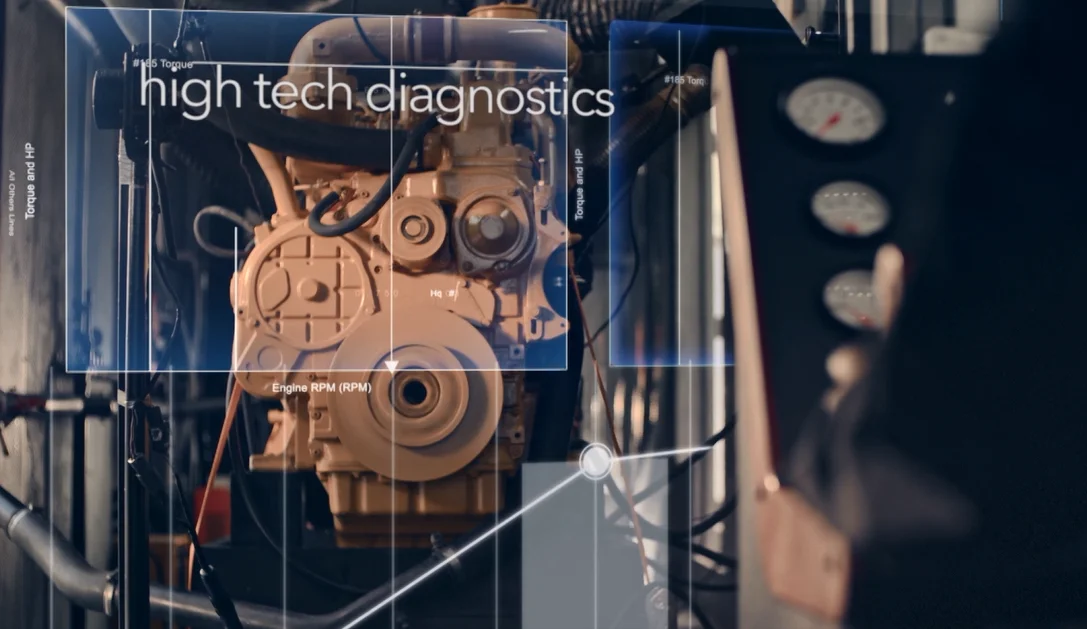
An engine dynamometer is a key element of the servicing and overhaul process for power units, as it enables a precise assessment of engine performance under controlled load conditions. It is a tool that allows for clear confirmation of whether the engine is functioning correctly and meeting the manufacturer's requirements.
The first task of the dynamometer test is the initial break-in of the engine after an overhaul, performed according to modern standards for diesel units. From the start, the engine should operate under a light load so that all components can seat properly and reach optimal operating parameters. This reduces the risk of later malfunctions and shortens the engine's adaptation time.
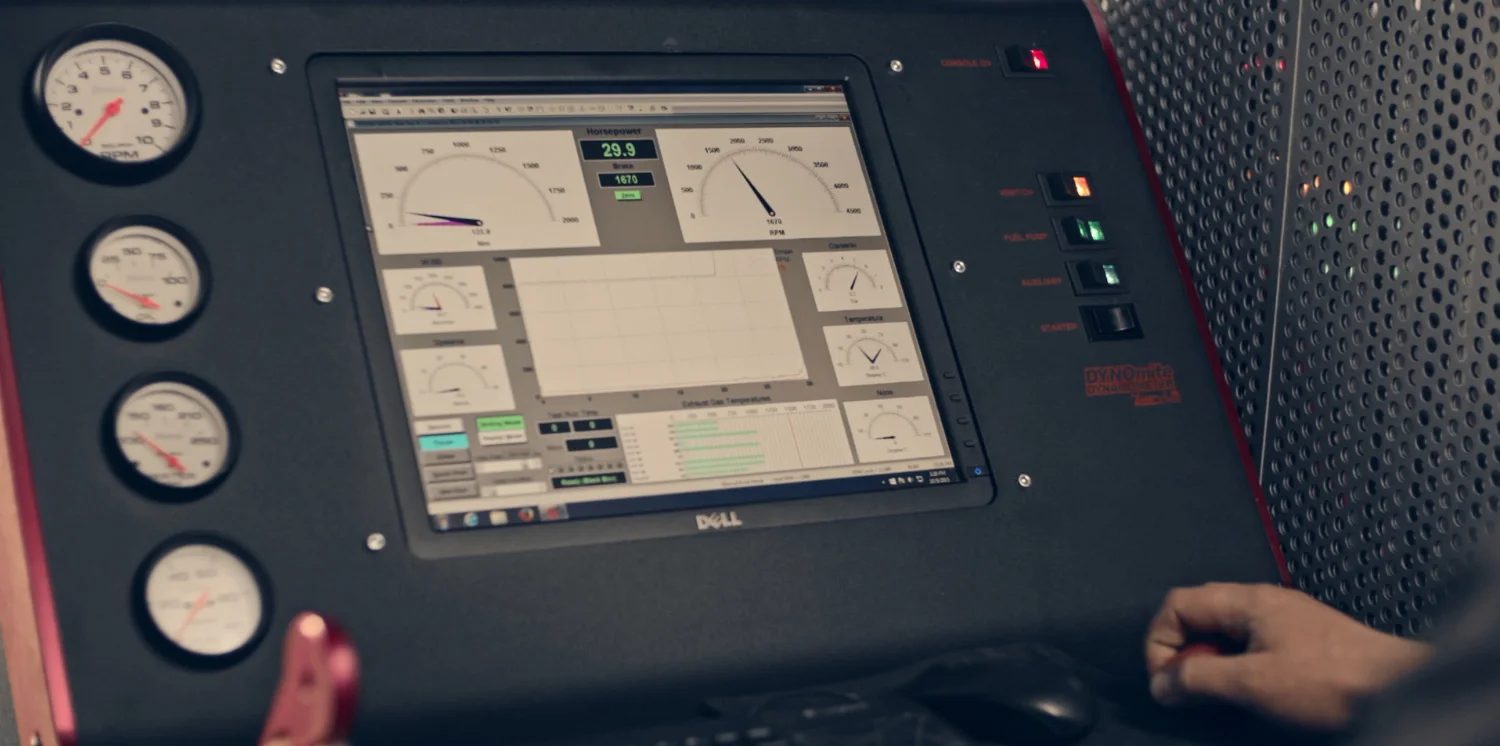
The second, equally important function of the dynamometer is the quality control of the work performed. During the test, key parameters such as power, torque, oil pressure characteristics across various temperature ranges, and fuel consumption levels are thoroughly checked. Analyzing this data allows for verification of the assembly's correctness and confirms that the engine is operating according to nominal values.
The dynamometer is also extremely useful in diagnosing used engines. Comparing the obtained parameters with factory values enables the technician to assess the unit's wear level and determine whether the engine is suitable for further operation or requires a general overhaul.
Rigorous verification
What is an engine dynamometer?
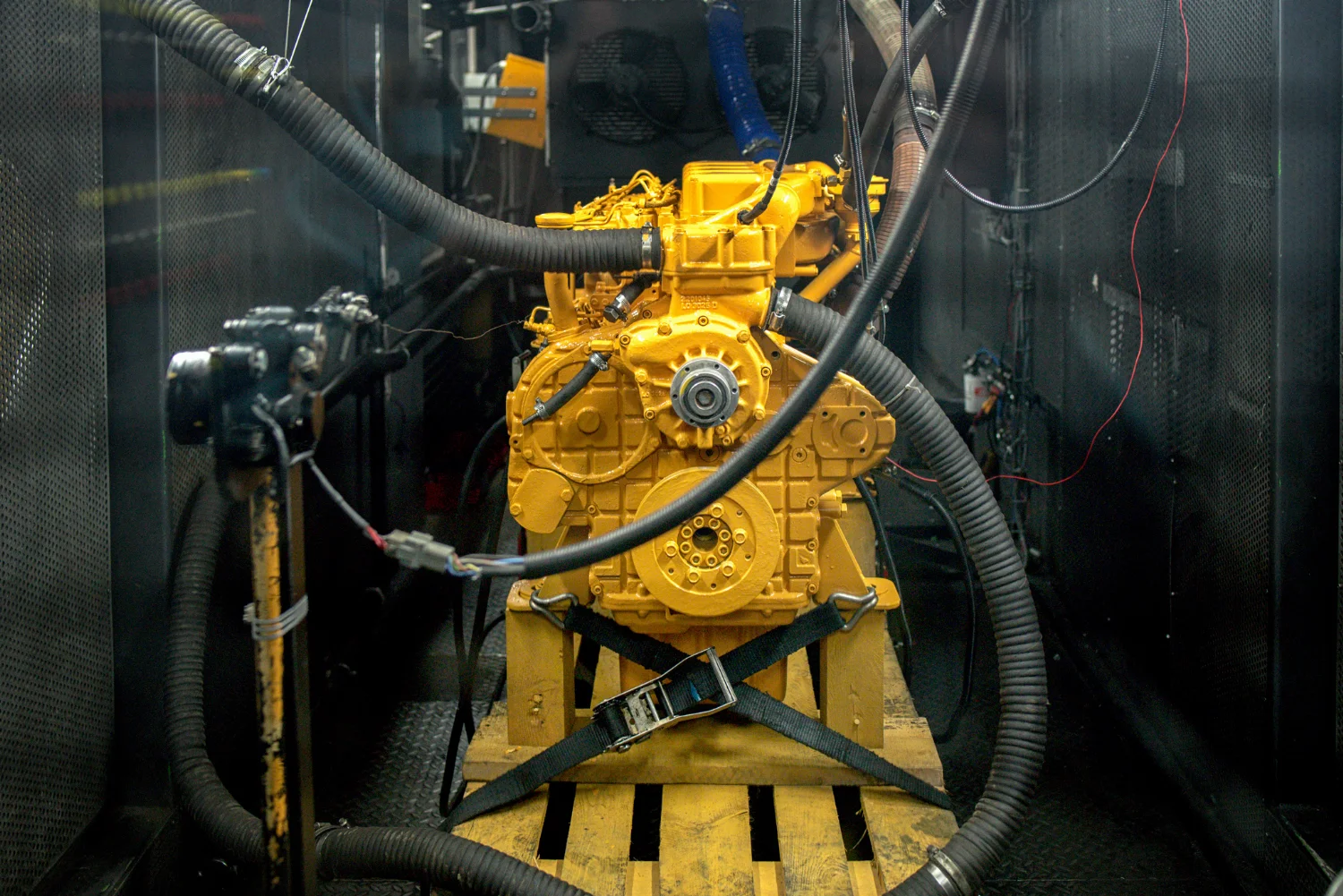
An engine dynamometer is a specialized device used for precise engine loading and measuring its operating parameters under controlled conditions. A key element of our dynamometer is the water brake, which is connected to the engine's flywheel via a cardan shaft. This allows for smooth and accurate control of the power unit's load at every stage of the test. In the case of construction machinery, traditional engine testing within the complete machine would be logistically complicated and imprecise due to its dimensions. The dynamometer eliminates these limitations and focuses exclusively on the engine, ensuring a reliable assessment of its condition. Additionally, a dynamometer test provides clean, undistorted power and torque measurements because it bypasses losses resulting from the operation of hydraulic systems, gearboxes, or other drivetrain components, which in construction machinery can significantly affect perceived performance. As a result, we obtain a full, credible picture of the engine's actual efficiency, which is crucial both for diagnosing faults and confirming the quality of a completed overhaul.
Wibako Quality Control
What sensors and systems operate in an engine dynamometer?
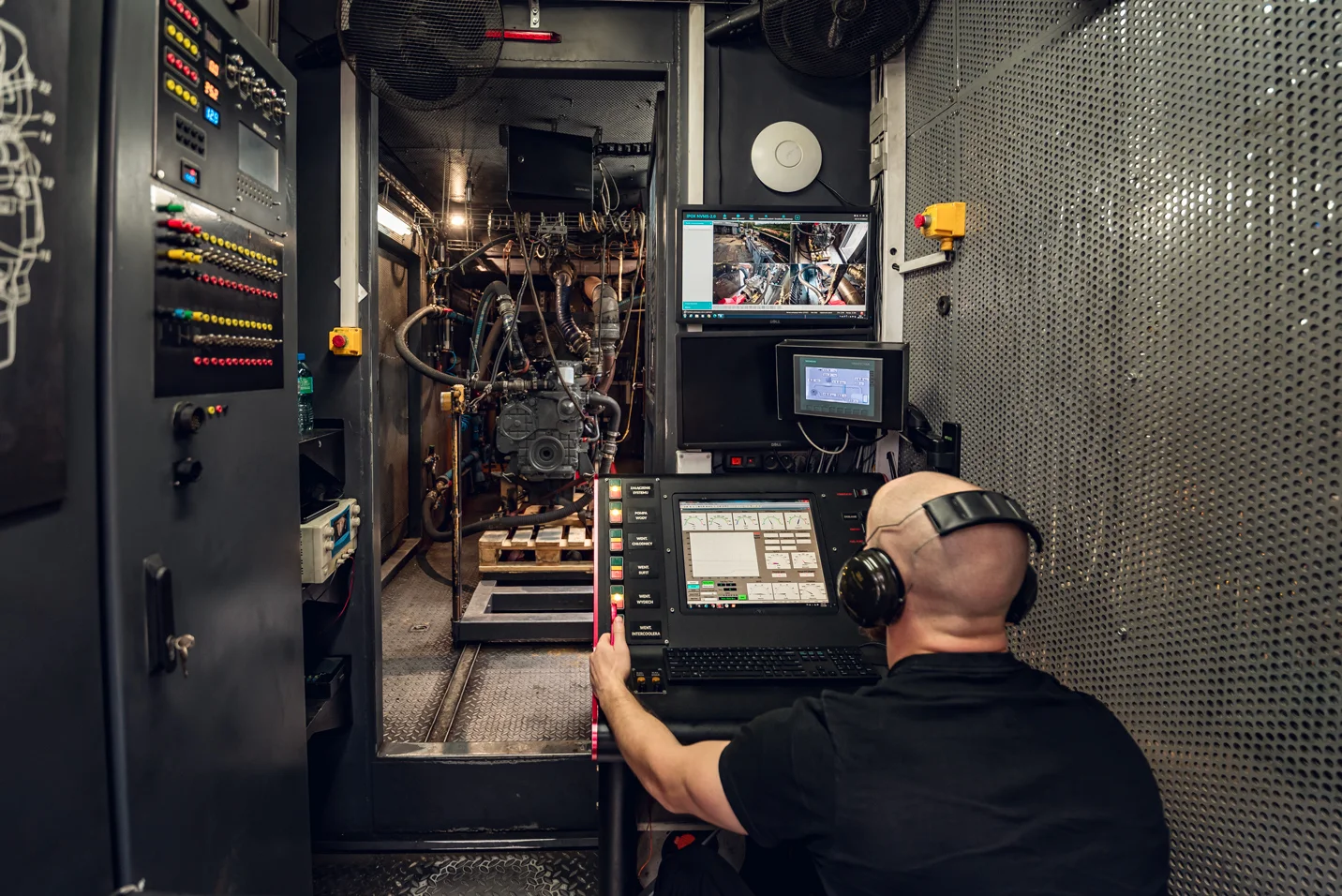
An engine dynamometer is an advanced diagnostic station equipped with a system of precision sensors that allow for the observation of the engine's actual operating state under load. Thanks to these sensors, the technician receives a full, reliable picture of the power unit's parameters, enabling an accurate assessment of its condition and the detection of irregularities that are impossible to notice during standard machine operation.
Sensors used during an engine test:
Torque sensor – allows for measuring the actual force generated by the engine.
RPM sensor – monitors the crankshaft speed.
Oil pressure sensor – indicates the state of the lubrication system under load.
Oil temperature sensor – monitors operating temperature, facilitating the assessment of unit wear.
Coolant temperature sensor – checks the efficiency of the cooling system.
Intake air temperature sensor – detects irregularities affecting combustion quality.
Intake pressure sensor – monitors the operation of the turbocharger and intake system.
Air cooler pressure sensor – allows for the assessment of intercooler efficiency.
Blow-by sensor (crankcase ventilation) – indicates the engine wear level and the condition of the piston rings.
Fuel flow sensor – measures fuel consumption in real time.
Fuel supply pressure sensor – monitors the correct operation of the fuel system.
Additional systems supporting the dynamometer's operation:
Fresh air supply system – ensures optimal combustion conditions for the engine.
Exhaust extraction system – guarantees safe and clean operation within the test chamber.
Dynamometer chamber ventilation system – maintains the proper temperature and removes excess heat.
Internal combustion engine cooling system – allows for conducting tests in long cycles without the risk of overheating.
Engine ready for work
What does the dynamometer testing process look like for an internal combustion engine after an overhaul?
First, the engine is mounted on the dynamometer stand, where all measuring systems are connected. Then, we fill and bleed the cooling system, and perform an initial start-up and bleeding of the fuel system, preparing the engine for load tests.
The first phase of the test is the initial run-in (braking), lasting from 8 to 16 hours, during which the engine operates under a load of approximately 30% power. In this phase, the engine components seat properly, and the technician monitors operating stability and key parameters.
The next stage is testing for power and torque. The engine is alternately loaded up to 100% of a given parameter across various RPM ranges, which allows for the creation of a full power and torque curve. After each short load cycle, there is a moment of "release" so that the engine's operating parameters can stabilize. This part of the test usually lasts from 1 to 2 hours.
Subsequently, the engine runs for another 2–3 hours at approximately 50% load, simulating typical operating conditions. This allows for an assessment of how the unit behaves during prolonged operation under medium load.
At every stage, parameters such as oil pressure, operating temperatures, system pressures, and overall unit stability are monitored in detail. This enables us to catch even the smallest deviations from the norm.
In total, the entire process-including the mounting and dismounting of the engine from the dynamometer-takes from 20 to as many as 48 man-hours, depending on the type of unit and the scope of the overhaul.
Every engine is tested
What does the dynamometer testing process look like for a used internal combustion engine?
The engine is mounted on the dynamometer stand, followed by filling and bleeding the cooling system. The next step involves the initial start-up of the unit and bleeding the fuel system, which prepares the engine for further testing. The engine is then brought up to operating temperature so that measurements reflect standard working conditions.
The main phase of the test involves braking for power and torque. The engine is alternately loaded up to 100% of a given parameter across various RPM ranges, allowing for the creation of a full power and torque curve. After each short cycle of full load, a stabilization phase follows, allowing the operating parameters to level out. This stage lasts about 1–2 hours, depending on the type of unit.
The next stage is 2–3 hours of operation at approximately 50% power, which simulates typical operating conditions. This allows for an assessment of the unit's running quality, the stability of temperatures and pressures, and the efficiency of auxiliary systems over a longer period.
The entire process, including the mounting and dismounting of the engine from the dynamometer, takes approximately 8–12 man-hours. This allows for a full and reliable assessment of the engine's condition before further operation or before deciding on an overhaul.
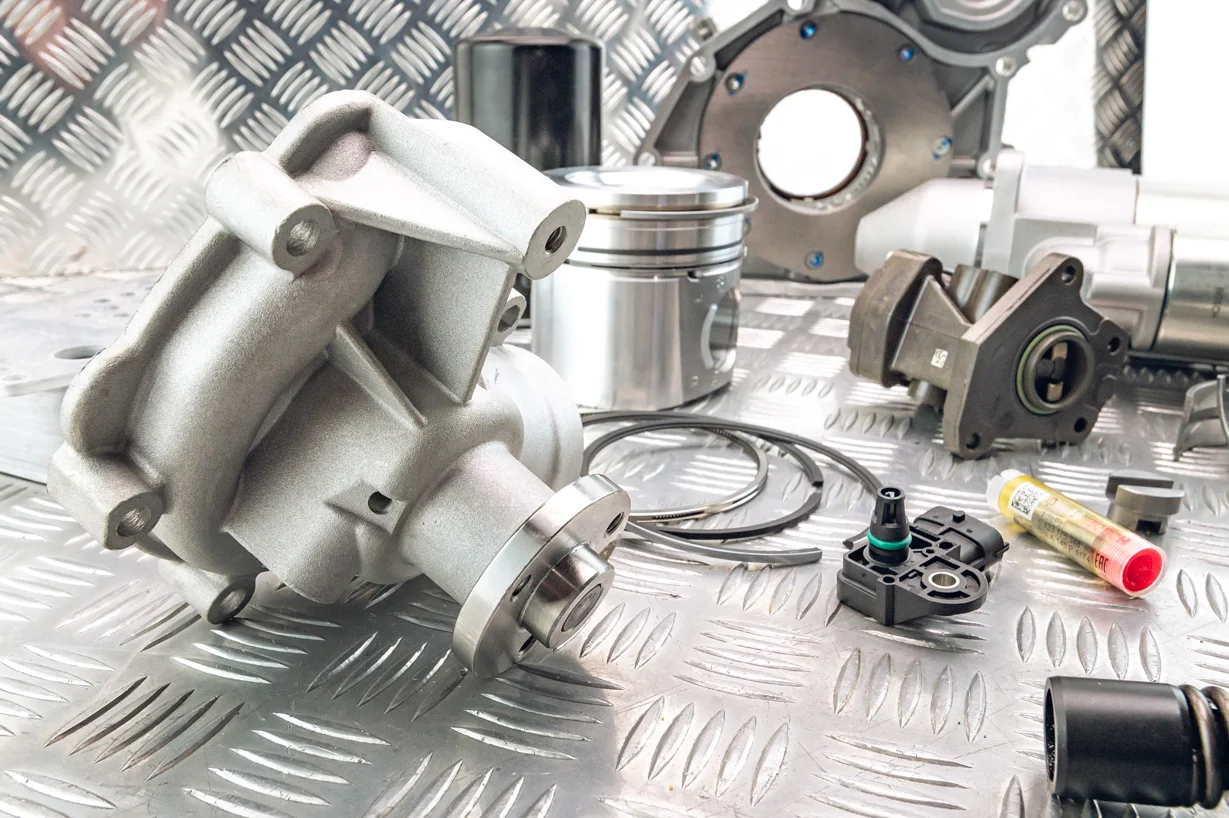
Performance and load tests
Frequently asked questions about engine dynamometer tests
Why is the dynamometer so important after an engine overhaul? The dynamometer plays a key role in the quality control of the work performed. It is the final stage that allows for confirming the correctness of the engine assembly and catching any potential irregularities before installation in the machine. A dynamometer test minimizes the risk of downtime and allows for the quick resolution of minor issues (such as a faulty sensor) without the need to remove the engine from the machine again.
Do situations occur where an engine requires adjustments during testing after an overhaul? Yes, such situations can happen, though they usually involve small components. We most frequently encounter problems with pressure, temperature, or flow sensors - both new and used - that may operate outside the norm. Occasionally, fuel systems or electrical harnesses reveal hidden defects. The dynamometer allows us to quickly diagnose and fix these before the engine reaches the machine.
Can I commission a test for my used or overhauled engine on your dynamometer? Yes, this is possible; however, each case requires individual consultation. Before accepting an engine, we check its compatibility with our available adapters and its technical condition to ensure the unit can safely operate on the dynamometer. This minimizes the risk of damage and ensures the proper course of the test.
Is there a risk of engine damage during a dynamometer test? The risk of damage is very low because the entire process takes place under the constant supervision of qualified personnel. If any irregularities are detected, the test is immediately interrupted, and the engine is re-evaluated. All parameters are monitored in real-time, which ensures maximum safety for the unit.
Distribution of complete power units
New, used, and remanufactured engines
To meet the needs of construction companies whose priority is minimizing machine downtime, we have expanded our offer to include the sale of complete power units. This serves as an excellent alternative in situations where the time required for a general overhaul of your own engine is too costly or when the existing unit is no longer economically viable to rebuild.
Our range includes three product standards, tailored to diverse budgetary and operational needs:
New engines: Units sourced directly from renowned manufacturers, covered by a full manufacturer's warranty. This solution is dedicated to customers seeking maximum service life and the latest technological solutions.
Overhauled (remanufactured) engines: Units fully regenerated in our service center using only certified components. This process restores the engines to their original nominal parameters, offering reliability similar to new products at a significantly lower investment cost.
Used engines: Selected units subjected to thorough technical verification. This solution represents an optimal cost compromise while maintaining certainty regarding the mechanical condition of the component.
A fundamental standard in our company is that every unit leaving the warehouse - regardless of its status - is subjected to advanced testing on a professional engine dynamometer.
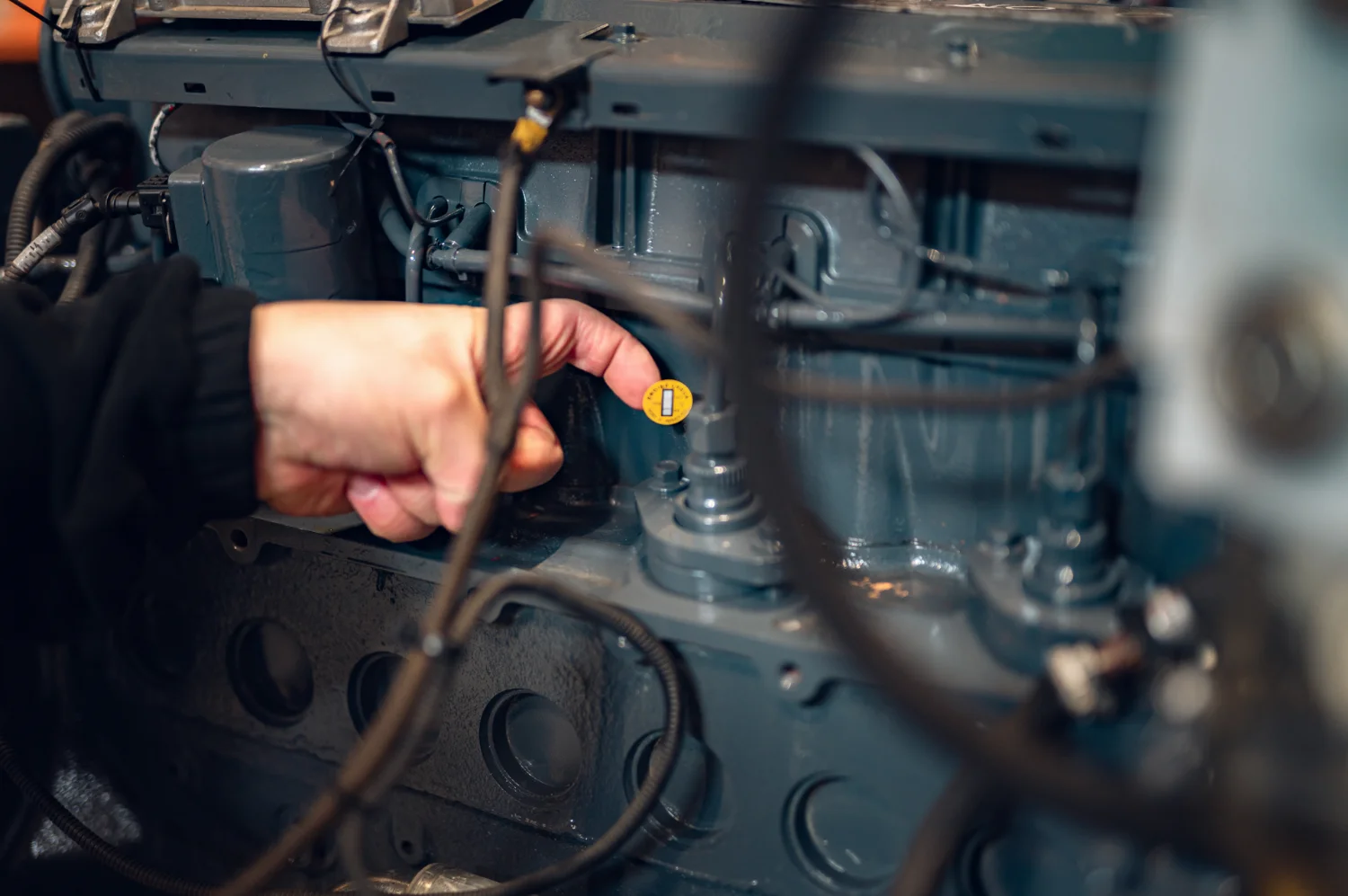
Return your machine to work faster and cheaper
Proven engines after comprehensive remanufacturing
Cummins exchange internal combustion engine
We offer Cummins exchange engines as a proven and economical solution for serious power unit failures. Every engine undergoes a comprehensive remanufacturing process, including verification, replacement of consumable parts, and load testing. Operating parameters are close to factory levels, ensuring reliability and a long service life. The engine is ready for installation and covered by a warranty.
Deutz exchange internal combustion engine
A Deutz exchange engine is a fast way to restore your machine to full efficiency without the need to purchase a new unit. Every engine is thoroughly inspected, remanufactured according to manufacturer standards, and equipped with new consumable parts. Tests confirming correct operation are performed before release. This solution guarantees high reliability and shorter downtime.
Liebherr exchange internal combustion engine
A Liebherr exchange engine serves as a reliable alternative to a costly replacement with a brand-new unit. Every engine undergoes detailed diagnostics, remanufacturing of key components, and final performance testing. This ensures stable operation even in demanding operating conditions. The unit is ready for installation and covered by a warranty.
Perkins exchange internal combustion engine
We offer Perkins exchange engines following a full technical remanufacturing process. Units are disassembled, verified, and reassembled using new consumable elements, allowing them to achieve parameters similar to new engines. Every engine is load-tested before being released to the customer. This solution ensures durability, safety, and predictable repair costs.
Caterpillar exchange internal combustion engine
A Caterpillar exchange engine is a solution dedicated to machines operating under heavy loads. Remanufacturing includes a full verification of technical condition, replacement of worn elements, and tests confirming correct operating parameters. As a result, the engine maintains high durability and reliability. This is a fast way to reduce downtime and operating costs.
Volvo exchange internal combustion engine
We offer Volvo exchange engines after comprehensive remanufacturing performed according to the highest technical standards. Every unit is thoroughly checked, assembled with new consumable parts, and tested before release. This ensures stable operation and parameters close to factory specifications. The engine is ready for installation and covered by a warranty.
What are the symptoms of engine wear in construction machinery?
The most common signs include a loss of power, increased oil consumption, excessive smoking, starting difficulties, uneven engine operation, and unusual noises. Early diagnostics allow for limiting the extent of damage and reducing repair costs.
Does the engine undergo testing after an overhaul?
Yes. A professionally remanufactured engine should be checked on a dynamometer or a test stand. These tests allow for the verification of oil pressure, operating temperatures, tightness, and performance parameters achieved under load.
Which engine brands are most commonly overhauled?
The most frequently overhauled engines are brands such as Cummins, Caterpillar, Deutz, Perkins, Volvo, and Liebherr, which are used in construction, mining, and industrial machinery.
How to care for an engine after an overhaul?
After an overhaul, it is essential to follow the engine break-in recommendations, change the oil and filters regularly, and monitor operating parameters. Regular servicing significantly extends the lifespan of the power unit.