

All About Liebherr V6 Engines! - Construction, Applications, Common Failures
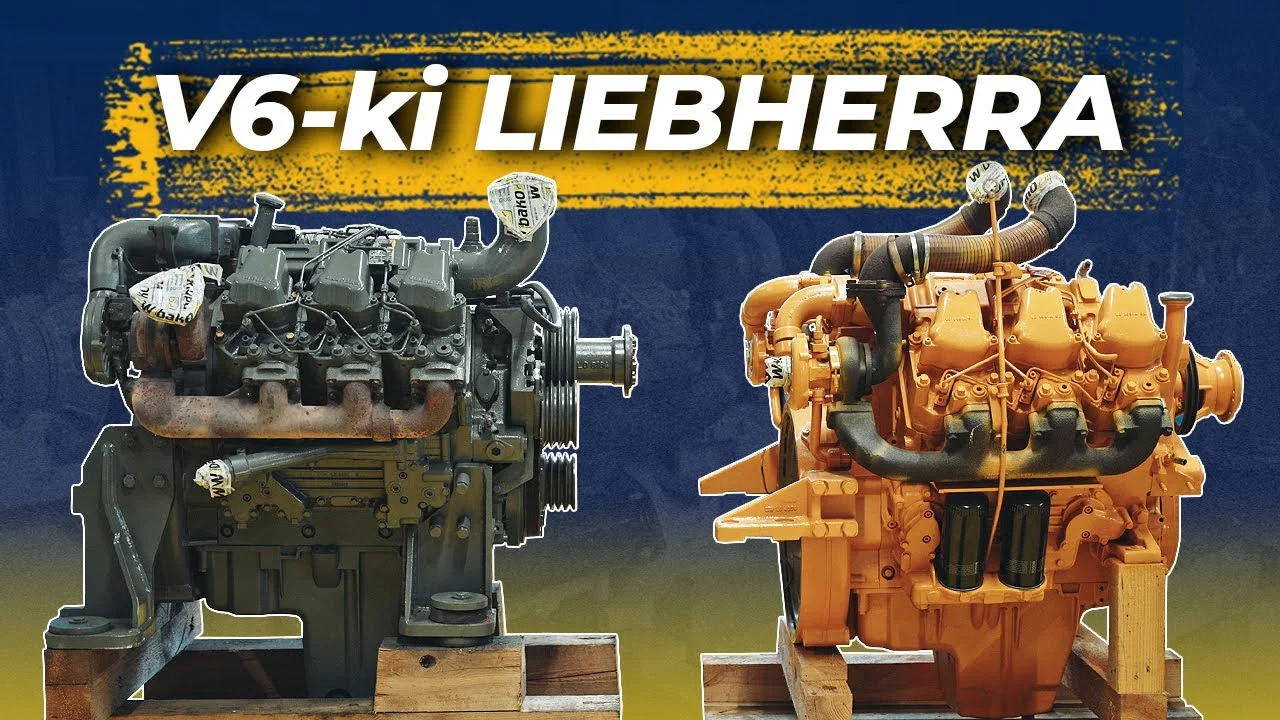
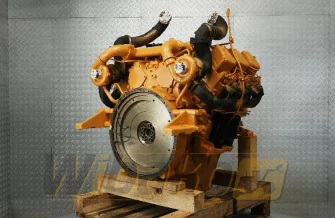
The Liebherr V6 engines of the D9306 and D9406 series, although they are aging designs and rare on the secondary market, remain crucial in heavy construction machinery, distinguished by their mechanical fuel system, extremely compact design, durable gear-driven timing, and unique characteristics of operation with high torque available from low RPMs. Their biggest drawback is the lack of lubrication, often leading to irreversible damage to the engine block.
Liebherr V6 D9306 vs D9406: Comparison of Rare Construction Machinery Engines
In the world of heavy construction machinery, such as excavators, bulldozers, or mobile cranes, engine reliability is an absolute priority. Among the most distinctive and still valued power units in this industry are the V6 Liebherr engines from the D9306 and D9406 families, as well as their larger versions D9308 and D9408. These are designs that, although they are already years old, still work hard in extreme conditions. We will take a closer look at these two generations of "V-sixes," analyzing their construction, key differences, and the most important operational issues.
It is worth emphasizing that these Liebherr V6 engines are currently rarely encountered, and even more difficult to find fully functional specimens ready for installation on the secondary market. Their presence in professional spare parts warehouses, such as WIBAKO, attests to their enduring value in the working machinery sector.
Technical Characteristics and Differences Between Generations
Despite belonging to the same family, the D9306 and D9406 represent two different generations, which is reflected in the technology that translates into years of production. Understanding these differences is crucial for proper maintenance and servicing.
Liebherr D9306 – A Classic from the Late 20th Century
This design dates back to the 1990s. It is the original generation of Liebherr's six-cylinder "V-engines," emphasizing complete mechanical independence. It is characterized by minimal electronics, and the engine operation is strictly mechanical.
Liebherr D9406 – A Younger Version from the Early 21st Century
The D9406 model is a slightly younger design, entering the 2000s. Although it still relies on a traditional mechanical fuel system, in more advanced applications (e.g., in some cranes), electronic elements have already been introduced, such as a computer engine speed regulator, replacing the lever regulator.
Displacement and Power of Liebherr V6 Engines
Both power units have a similar displacement. The displacement of Liebherr V6 engines is approximately 12 liters, which means about 2 liters per cylinder. The power, however, varies and depends on the specific application in the machine:
- In the case of the D9406 engine from a crawler excavator, the power can be, for example, from 132 kW.
- In crawler bulldozers, it is often found that the power is slightly lower or the engine operates at a lower RPM, optimized for maximum torque.
One of the main sources of information about power and RPM is the nameplate of the engine (of course, there is also the technical documentation of the machine).
Construction and Design of the Liebherr Engine: Fuel System and Timing
Durability and simple construction are features that keep Liebherr engines in use. This has been achieved through proven, classic technical solutions.
Fuel System – Mechanics Above All
In these generations of engines, classic fuel systems dominate. This means the use of traditional, inline or sectional fuel injection pumps, mechanically controlled. Such a design ensures high resistance to fuel quality and simplicity of diagnostics and repairs. Versions without a computer (e.g., Liebherr D9306) are entirely mechanically controlled.
Timing in Construction Machinery Engines – Durability Over Silence
The vast majority of equipment engines, and Liebherr V6 is no exception, rely on gear-driven timing. This solution is significantly louder than the belts or chains popular in cars, but at the same time: incomparably more durable. The camshafts are located directly in the engine block, and the drive to the valve lifters is controlled using a system of cups and push rods.
The gear-driven timing, as long as the engine is properly lubricated and operates within nominal parameters, is practically fail-safe and does not require intervention.
Air Cooling and Crankcase Ventilation System
Depending on the engine's load and its intended use, various solutions for boosting and ventilation have been employed.
Intercooler – An Option for More Powerful Versions
In some configurations, particularly in those more stressed (e.g., some excavators or cranes), there is an intercooler (air-to-air cooler), connected to the intake manifold. Its task is to cool the air directed to the engine, which increases its density, thereby enhancing combustion efficiency and power. In less stressed versions, such as in crawler bulldozers, intercoolers are usually absent; air is directed directly from the turbochargers to the intake manifold.
One or Two Breathers? A Matter of Size
The number of engine breathers, or rather breather separators, is related to the size and volume of the engine. Larger units, which "breathe more," require more efficient crankcase ventilation:
- In smaller Liebherr engines (e.g., V6), there is usually a single breather/separator.
- In larger units, such as Liebherr D9408, double breather separators are used to ensure proper working conditions and proper gas discharge.
Operational Issues: Lubrication, Filters, and Parts Availability
Proper operation and access to parts for Liebherr V6 engines are the foundation of their longevity.
How Much Oil Does the Liebherr V6 Engine Hold? Depends on the Machine
The amount of oil that fits in the engine is a question whose answer strictly depends on the application in the machine, not just on the engine itself. The oil pan is designed with working conditions in mind:
- Typically, Liebherr V6 engines hold between 15 to 20-25 liters of oil.
- In machines operating at high angles (e.g., mobile cranes, excavators), larger oil pans are installed, which serve as a so-called oil buffer. This buffer prevents accidental interruption of lubrication, and consequently – engine seizure.
- In machines that usually operate level (e.g., upper engines in cranes, some bulldozers), the pan can be smaller and flatter, often dictated by required installation space.
Oil and Fuel Filters – Service Logistics
The placement of filters is dictated by construction issues, meaning ease of access for the operator and service technician, rather than a technical requirement of the engine:
- In crawler excavators, where access to the engine compartment is difficult, filters are often mounted externally, in an easily accessible location or even in side access covers.
- In bulldozers, where access is better, filters can be mounted closer to the block.
- In machines with very tight installations, such as cranes, filters may be placed on top of the block and accessible entirely from above.
Parts Availability and "White Ravens"
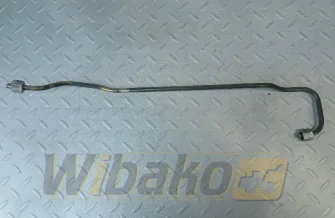
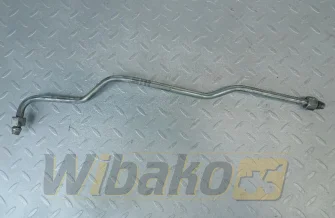
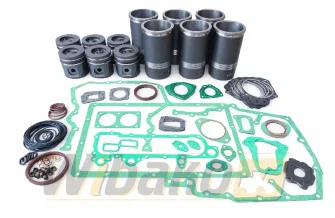
Despite the age of the designs, parts availability for Liebherr V6 engines (bearings, seals, pistons, rings, used parts) is very good in specialized warehouses. At WIBAKO, we have a wide assortment for the repair and rebuilding of these units.
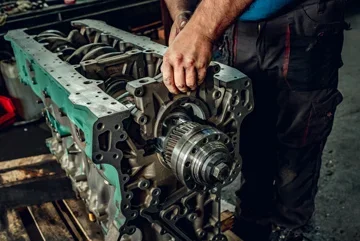
However, there is one key element that is often referred to as a "white raven": the engine block D9406. Due to intensive use, these blocks often wear out at the crankshaft bed. The design prevents alignment or oversizing, meaning that such a block is only suitable for replacement. Hence its value and rarity.
The Biggest Problem with Liebherr V6 Engines
Although half-jokingly one might say that the biggest problem of any engine is the operator, seriously speaking, the greatest threat to the Liebherr V6 is the lack of lubrication. These units, especially the V6 construction engines, are particularly sensitive to oil pressure or insufficient lubrication. This is especially critical in the context of problematic blocks.
Damage to the crankshaft bed of the block, caused by poor lubrication, and consequently the turning of the bearing in the block is irreversible and necessitates the replacement of the entire unit. For this reason, regular monitoring of oil level and pressure is absolutely crucial for maintaining the engine's functionality.
Cold Start of the Liebherr Engine
How do these engines perform in low temperatures? Cold starting is not a problem. In Liebherr V6 engines for construction machines, instead of classic glow plugs, flame plugs are used. These are two fuel-powered plugs designed to preheat the air in the intake manifold, facilitating and shortening the starting process in any weather conditions.
Summary
- Generations: Liebherr V6 engines D9306 (90s) and D9406 (2000s) are 12-liter units with power adapted to the specifics of the machine (excavator vs bulldozer).
- Construction: They feature a classic mechanical fuel system and an exceptionally durable gear-driven timing.
- Problem: The biggest issue is the lack of lubrication, leading to irreversible damage to the crankshaft bed in the block, which, especially in D9406, is a hard-to-find "white raven."
- Operation: The amount of oil (approx. 20 liters) varies and depends on the oil buffer in the pan, protecting the engine when working at high angles.
- Parts: Spare parts are widely available in specialized wholesalers, allowing for effective rebuilding and repair of these aging but solid units.
FAQ – Frequently Asked Questions about Liebherr V6 Engines
What is the key difference between Liebherr D9306 and D9406 engines?
The key difference lies in the generation and level of advancement: D9306 (90s) is a fully mechanical design, while D9406 (2000s) is younger and may have an electronic engine speed regulator in some versions.
How much oil should be poured into the Liebherr V6 engine?
The amount of oil in the Liebherr V6 engine is typically around 20 liters, but it strictly depends on the application in the machine, as larger pans serve as oil buffers, protecting the engine from seizure at angles.
Is the timing in Liebherr V6 engines belt-driven or gear-driven?
No, the timing in these construction engines is based on extremely durable and reliable gears, which is a noisier solution but significantly more resistant to damage than traditional belts or chains.
What is the biggest problem with Liebherr V6 engines?
The biggest problem is the lack of lubrication, which leads to wear of the crankshaft bed in the block; a damaged block is irreparable (alignment) and must be replaced, which is costly due to its rarity (e.g., in D9406).
Where can I buy parts for Liebherr D9306 and D9406 engines?
Parts for both units, such as bearings, seals, pistons, and used parts, are available in specialized spare parts warehouses, such as WIBAKO.