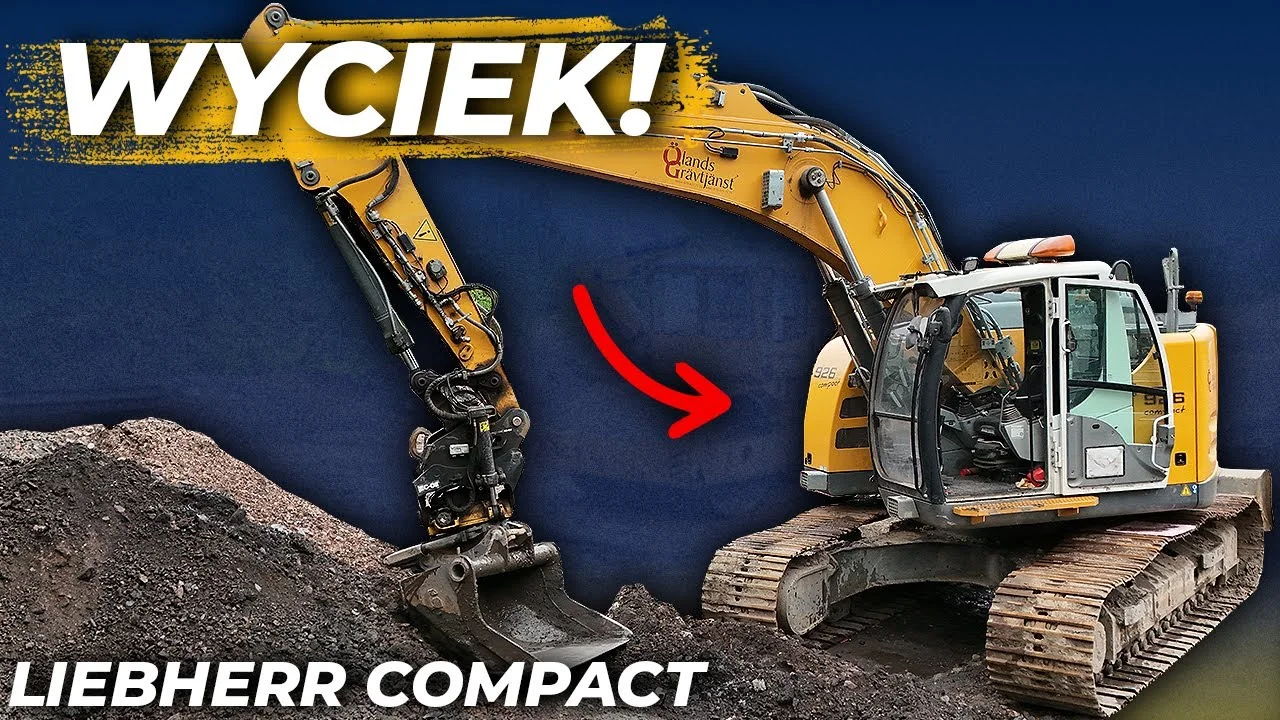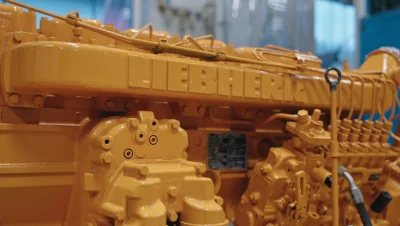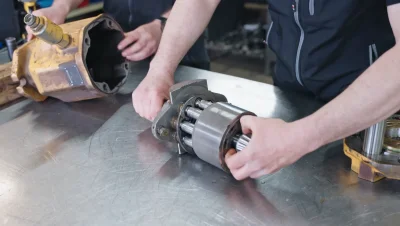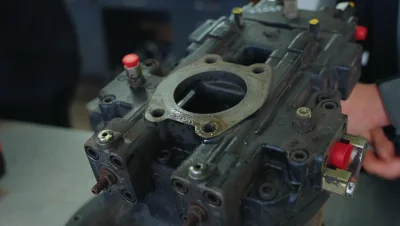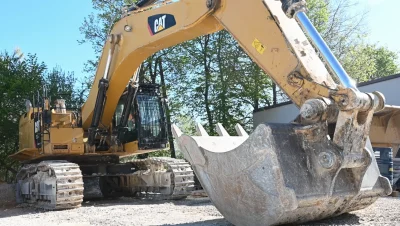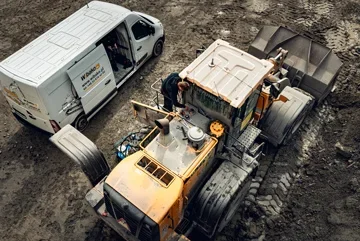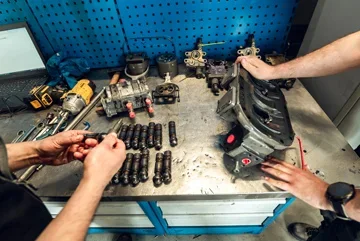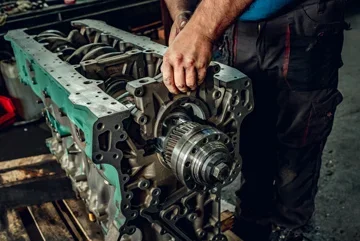


We present a detailed case study of repairing a head gasket leak in the Liebherr Compact 926 machine and analyze the critical design points of these units, such as the lubrication system and timing mechanism.
Case Study: Diagnostics and Engine Repair in Liebherr Compact 926 Excavator
In the world of internal combustion engines, and thus heavy construction machinery as well, failures in the cooling and lubrication systems are among the most dangerous for the longevity of the power unit. Below, we present the service history of the Liebherr Compact 926 excavator, which came to us with a suspicion of water in the oil.
Failure Symptoms: Fluid Leaks and Power Loss
The client's report was quite precise: the machine "spits out" coolant, and the leak is visible around the head. An additional symptom was the replacement of the temperature sensor by the operator, which, however, did not solve the problem. Importantly from a diagnostic perspective, the machine lost power and boost pressure. Measurements showed that the boost pressure dropped to around one bar, which is insufficient for proper operation under load.
Verification of the Fault: Why Do We Wash the Engine Block?
In the case of suspected leakage at the junction of the head and block, diagnostic certainty is crucial. The verification procedure began with thoroughly washing the engine block. This step is essential to rule out fluid drainage from higher parts of the engine and to have one hundred percent certainty regarding the source of the leak. After washing and warming up the machine, the coolant leak from the head was unequivocally confirmed, which qualified the head for disassembly.
Disassembly of the Head: Corrosion Issues and Work Chronology
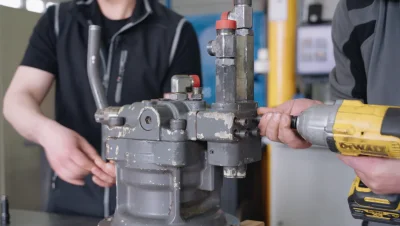
Working on older machines often involves problems with "stuck" or corroded threaded connections. In this case, despite the relatively short operating time of the machine, the cover and manifold bolts were heavily corroded. To avoid breaking them, induction heating was used, allowing for safe removal of the components. The disassembly process required strict chronological adherence, including the removal of:
- Exhaust, intake, and water manifolds.
- EGR system along with coolers.
- Valve cover
- Injectors.
Particular attention should be paid to the wiring harness of the injectors and hidden wires, as damage during disassembly generates additional costs.
Component Regeneration: Head and Turbocharger
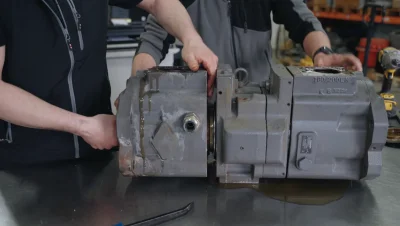
Simply replacing the head gasket (UPG) is often not enough. In the discussed engine, the head underwent comprehensive regeneration, which is a standard procedure when we carry out professional repairs of Liebherr engines. The work in the specialized facility included:
- Leak testing
- Surface planning.
- Replacement of valve seals
- Seating the valve seats.
Due to previous issues with boost pressure (1 bar), the turbocharger was also regenerated. Such a comprehensive approach guarantees the restoration of full functionality of the unit.
Installation of the Head in the Liebherr Engine – Procedure and Tightening Moments
Correct installation of the head in engines requires adherence to the manufacturer's stringent standards. In this model of the Liebherr engine, it was necessary to use new head bolts. Before installing the injectors, their O-rings were lubricated to prevent them from being pinched during seating.
Valve Adjustment and Cleaning of Electronics (ECU)
After installing the keyboard, valve adjustment was performed. It is worth noting that in this engine, the gap on the intake and exhaust valves is the same, which facilitates the procedure. The service was concluded with preventive cleaning of the engine control unit (ECU) connectors with a contact cleaner to protect them from corrosion and tarnishing.
Technical Characteristics of Liebherr Engines
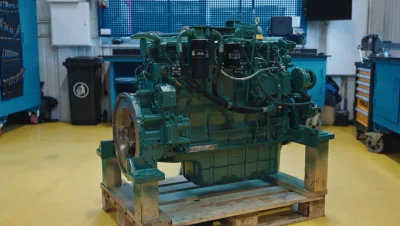
The case described above concerned a specific machine, but it is worth taking a closer look at the design of Liebherr engines that power these devices. They are units valued for their mechanical durability but have their specific operational requirements.
Fuel System and Timing Mechanism – Durability Over Work Culture
These engines feature a fairly durable fuel system. A characteristic feature is also the timing mechanism based on gears. This solution generates more noise than belts or chains, but in return offers incomparable durability. The camshafts are located in the block, and the valve drive is realized through pushrods and pushrods. As long as the engine is lubricated, this system is practically maintenance-free.
Summary
The described case of repairing the Compact 926 excavator shows that a quick response to leaks and comprehensive regeneration (head + turbo) allows the machine to regain full power and efficiency.
FAQ – Frequently Asked Questions
What are the symptoms of a damaged head gasket in a Liebherr engine?
Typical symptoms include "spitting" coolant, the presence of oil in the coolant (or vice versa), visible leaks at the junction of the block and head, and a loss of engine power and boost pressure, as was the case described.
What is the tightening moment for the head in the Liebherr Compact 926 engine?
The procedure requires three steps. The first stage is tightening to 80 Nm, the second stage is 150 Nm, and the third stage is angular tightening of 270 degrees. The manufacturer also recommends the absolute use of new head bolts.