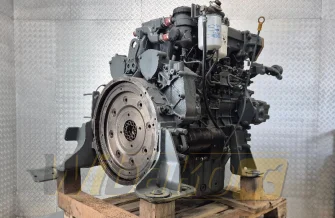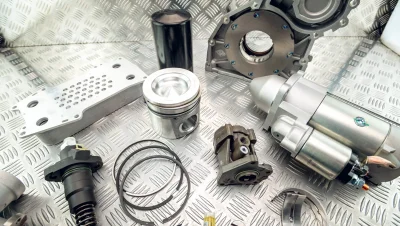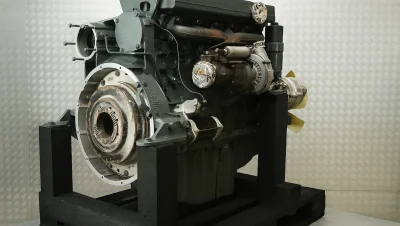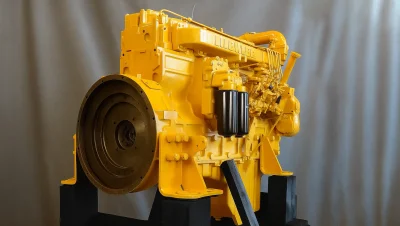


Overhaul of the Liebherr D934 A7 Engine in a Liebherr A 924 Wheeled Excavator
Professional Service for the Liebherr A 924 Wheeled Excavator
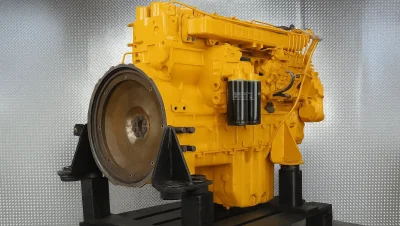
The Liebherr A 924 wheeled excavator is one of the most commonly used machines for earthmoving, road construction, municipal, and material handling applications. This model is valued for its high mobility, efficient hydraulic system, and durable construction. The manufacturer equipped this machine with the Liebherr D934 A7 engine, which belongs to a modern series of industrial diesel units used in construction and off-highway machinery. The approximately 7-liter engine with an output of around 140 kW provides smooth operation and sufficient torque even under heavy-duty conditions.
Our construction machinery service center received a Liebherr A 924 excavator operating on road construction projects near Katowice. The operator reported increased engine oil consumption, uneven engine performance, and noticeable exhaust smoke under load. Additional issues included difficulty starting the engine when hot and a loss of power while operating hydraulic attachments.
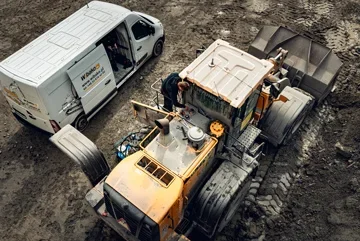
Our mobile service team carried out an initial diagnostic inspection directly at the customer’s site. We began with a compression pressure test, analysis of engine operating parameters, and inspection of the intake and cooling systems. An endoscopic inspection of the cylinders was also performed. The results indicated significant wear of the crank-piston assembly. Furthermore, exhaust gas and oil consumption analysis confirmed blow-by gases entering the crankcase. After consulting with the machine owner, a decision was made to perform a complete overhaul of the Liebherr D934 A7 engine.
Removal of the Liebherr D934 A7 Engine from the Machine
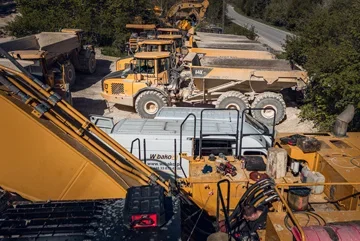
The engine removal was carried out directly at the machine’s working site using a crane provided by the customer. The Liebherr A 924 excavator has a relatively compact engine compartment, so the entire process required proper preparation and protection of all hydraulic and electrical connections.
Before starting the work, our mechanics disconnected the batteries and fully secured the fuel system. The coolant and engine oil were then drained. The next stage involved labeling and disconnecting the electrical installation, pressure lines, and air intake system. Special attention was given to protecting the SCR system components and exhaust emission equipment.
After disconnecting the radiator, hydraulic lines, and drive shaft, we proceeded with removing the engine mounting supports. Due to the considerable weight of the power unit, all operations were carried out step by step in accordance with safety procedures. Once the engine was removed from the compartment, additional inspections of the engine mounts, intake hoses, and cooling system were performed.
The engine was prepared for transport and delivered to our headquarters in Kojszówka, where we carried out a complete inspection of all components. Thanks to proper planning of the dismantling process, we avoided damage to the hydraulic installation and electronic systems of the machine.
Inspection of the Liebherr D934 A7 Engine
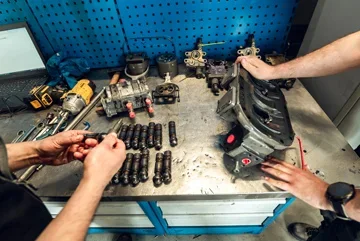
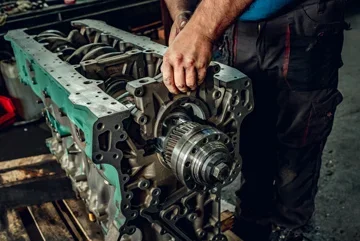
After delivering the engine to the workshop, we began a detailed inspection process. The first stage involved rotating the crankshaft and checking axial clearances. The engine was then completely disassembled into individual components.
During disassembly, we confirmed significant wear of the cylinders and pistons. The cylinder liners showed signs of operational wear and localized overheating. The piston rings had lost their sealing properties, causing exhaust gases to blow into the crankcase. The connecting rod bearings showed wear, although the crankshaft was suitable for reconditioning.
We performed a complete inspection of the crankshaft, including measurement of the main and rod journals, inspection of oil passages, and verification of crankshaft runout. Inspection of the connecting rods included checking for twisting, bending, and examination of the connecting rod bolts.
The cylinder head underwent a leak test in a heated water bath. We checked the cooling channels and the condition of the valve seats. The inspection revealed worn valve guides and partially burned exhaust valves.
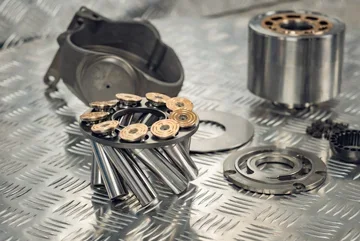
At the same time, we inspected the turbocharger, injection pump, and fuel injectors. The injectors were tested on a dedicated test bench. Spray characteristics deviated from the manufacturer’s specifications, so we decided to regenerate the fuel system.
Reconditioning and Repair of the Liebherr D934 A7 Engine
Repair of the Crank-Piston Assembly
The engine rebuilding process began with crankshaft reconditioning. The crankshaft was ground and the oil channels were thoroughly cleaned. Appropriate oversized main and connecting rod bearings were then selected.
The engine block was prepared for installation of new cylinder liners. New pistons with complete piston ring sets were installed. All components were selected according to the specifications of the Liebherr D934 A7 engine manufacturer.
The connecting rods were checked for geometry and balance. After completing the measurements, new connecting rod bolts and a complete set of new bearings were installed. During assembly, all tightening torques were applied according to the manufacturer’s documentation.
Cylinder Head Reconditioning
The cylinder head mating surface was resurfaced. We replaced the valve guides along with a complete set of intake and exhaust valves. After machining the valve seats, we checked system tightness and proper valve operation.
The camshaft underwent a full inspection for wear on the lobes and journals. Due to its good technical condition, the component was reused after precise measurements were completed.
Fuel System Regeneration
The injection pump was sent to a specialized diesel fuel system regeneration facility. The injectors received new nozzles and were calibrated according to the manufacturer’s specifications.
After regeneration, all fuel system components were retested on a test bench. This allowed proper fuel dosing and correct engine operating characteristics to be achieved.
Auxiliary Equipment Regeneration
The turbocharger underwent inspection for axial and radial clearances. Due to bearing wear, a complete turbocharger rebuild was performed. Additionally, we checked the alternator, starter motor, and electrical system components responsible for engine starting.
After all work was completed, we proceeded with professional engine assembly. Every stage of assembly was documented by our mechanics. We used new seals, hoses, and service components. Particular attention was paid to accurate timing setup and oil system tightness.
Testing the Liebherr D934 A7 Engine on the Engine Dyno
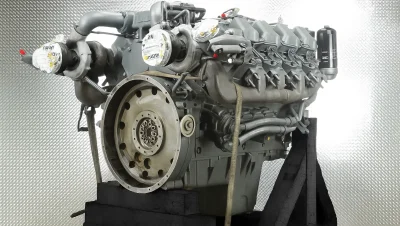
One of the most important stages of the entire process was testing the engine on our engine dynamometer. Few construction machinery service companies have a professional test bench capable of fully testing an engine before installation into the machine. This allows us to accurately verify the operating parameters of the Liebherr D934 A7 engine before reinstalling it in the excavator.
After mounting the engine on the dyno, we carried out the initial startup procedure. At first, the engine operated under light load of approximately 20–30% of nominal power. This stage lasted more than 16 operating hours. During this time, we monitored operating temperature, oil pressure, fuel system parameters, and the tightness of all connections.
During the tests, we regularly analyzed operating parameters across different RPM ranges. We checked oil pressure stability, turbocharger response, and fuel dosing accuracy. Additionally, we monitored exhaust temperatures and engine behavior under dynamic load.
After the break-in stage was completed, the engine was repeatedly loaded up to nominal values. The dynamometer allows simulation of real working conditions of the Liebherr A 924 wheeled excavator. This makes it possible to detect potential issues before the engine is installed in the customer’s machine.
Our dyno also allows verification of combustion parameters, exhaust emissions, and cooling system stability. This is extremely important for industrial engines used in construction machinery, as these units often operate under high loads for many continuous hours.
After completing the load tests, we performed additional filter inspections, oil analysis, and leak testing of the entire system. The engine achieved correct operating parameters and was prepared for installation in the excavator.
Installation of the Engine in the Liebherr A 924 Excavator
The installation of the Liebherr D934 A7 engine was once again carried out at the machine’s worksite. A crane provided by the customer was used during installation. The entire process was completed according to manufacturer procedures and service documentation.
Before positioning the engine, we carefully inspected the engine compartment and cooperating components. Some cooling system hoses, air intake pipes, and selected clamps were replaced. We also verified the condition of the radiator, intercooler, and hydraulic mountings.
After placing the engine on the mounting supports, we performed precise alignment and connected all electrical and hydraulic lines. Every connection was checked for leaks and proper routing. Particular attention was paid to the intake system and turbocharger pressure lines.
Next, the system was filled with fresh oil and coolant. After bleeding the fuel system, we proceeded with the first engine startup in the machine. Our mechanics conducted tests together with the excavator operator. We checked engine response under hydraulic load and machine behavior during driving and attachment operation.
After several hours of testing, we carried out another inspection of system tightness and operating parameters. Following successful completion of all tests, the installation and handover protocol was signed and the machine was returned to operation.
Post-Overhaul Service Support
Every rebuilt engine is covered by a warranty and can be supported by our mobile service team. For the Liebherr D934 A7 unit, we recommended the first inspection after 50 operating hours. This inspection includes not only replacement of filters and oil, but also leak inspection, connection checks, and evaluation of engine auxiliary equipment operation.
Subsequent inspections are performed every 250 operating hours or at least every 3 months. Regular maintenance helps extend engine life and reduce the risk of major failures.
Machines Using the Liebherr D934 Engine
Engines from the Liebherr D934 series are used in many Liebherr construction and material handling machines. These engines can be found in wheeled excavators, material handling excavators, selected loaders, and specialized machinery.
Thanks to their durability and wide availability of spare parts, Liebherr D934 engines are a popular choice in the construction and municipal industries. Regular servicing and proper diagnostics help maintain high performance for many thousands of operating hours.
Summary of the Liebherr D934 A7 Engine Overhaul
The complete overhaul of the Liebherr D934 A7 engine in the Liebherr A 924 wheeled excavator restored the machine to full operational condition and eliminated issues related to excessive oil consumption and power loss. Through comprehensive diagnostics, component regeneration, and dynamometer testing, the customer received a verified engine ready for further operation.
Our construction machinery service center performs repairs, rebuilds, and regeneration of diesel engines used in off-highway machinery. We provide mobile engine removal and installation services, and thanks to our own engine dyno, we are able to thoroughly test each unit before delivery to the customer.
If your Liebherr A 924 excavator or any other machine equipped with a Liebherr D934 engine requires diagnostics, repair, or a complete overhaul, please contact our service department.
Internal link: Liebherr engine overhauls
Internal link: wheeled excavator service
Internal link: WIBAKO engine dynamometer
Contact Us
Do you need a Liebherr D934 A7 engine overhaul or service for your Liebherr A 924 wheeled excavator? WIBAKO provides complete diesel engine repairs, mobile engine removal and installation, and testing on a professional engine dynamometer.